

Why Shower Drains Clog So Easily
Knowing how to unclog a shower drain starts with understanding what’s blocking it. Most shower drains become clogged gradually as hair, soap residue, and other debris collect inside the drain. At first, water may simply drain more slowly, but over time a small blockage can develop into a complete shower drain clog.
Addressing the problem early is often easier than waiting until water begins pooling around your feet during every shower.
What Causes a Shower Drain Clog?
Not every clog forms the same way, but several common issues are responsible for most slow-draining showers.
Hair Clogs
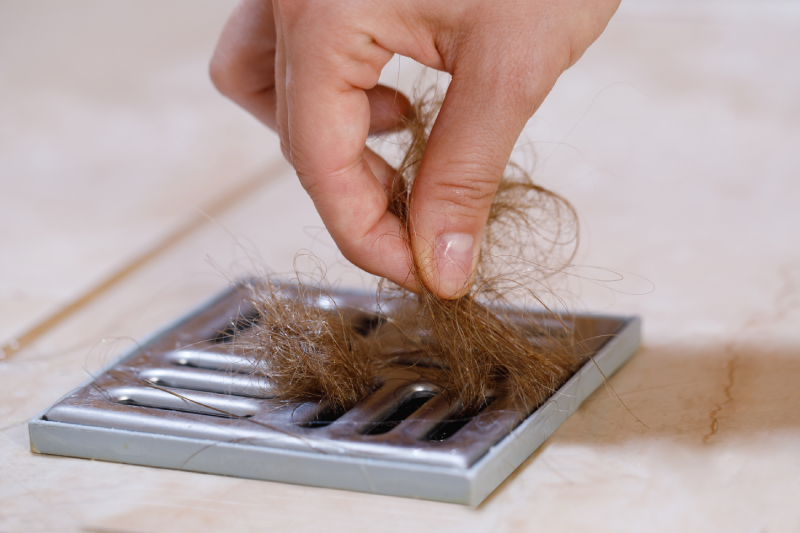
A hair clog is one of the most common causes of a blocked shower drain. Hair can wrap around itself inside the drain and gradually collect soap residue and other debris, creating a blockage that restricts water flow.
Soap and Product Buildup
Soap residue, shampoos, conditioners, and body wash can leave deposits inside the drain over time. As these materials accumulate, they make it easier for hair and other debris to stick to the inside of the pipe.
Problems Beyond the Drain Opening
Sometimes the blockage isn’t located directly beneath the drain cover. A clog deeper in the drain line or near the P-trap may continue slowing drainage even after visible debris has been removed.
How to Unclog a Shower Drain Safely
Before reaching for harsh chemical cleaners, try a few simple methods that may help clear a shower drain without damaging your plumbing.
Remove Visible Debris
Begin by removing the drain cover if possible and clearing away any visible hair or soap residue around the opening. Even a small amount of debris can significantly reduce water flow.
Use a Drain Snake
A small drain snake is designed to reach farther into the drain than your fingers can safely reach. It can often remove a hair clog that’s trapped below the drain opening without requiring chemicals.
Try Baking Soda and Vinegar
Many homeowners use baking soda and vinegar as part of routine drain cleaning. Allow the mixture time to work before flushing the drain thoroughly with hot water. While this method may help loosen minor residue, it isn’t always effective for larger or deeper clogs.
Flush the Drain With Hot Water
After removing debris, flushing the drain with hot water may help wash away loosened soap residue and smaller particles that remain inside the pipe.
What Should You Avoid?
Some attempts to unclog shower drain blockages can create additional plumbing problems.
Avoid:
- Repeatedly using harsh chemical drain cleaners
- Forcing objects deep into the drain
- Ignoring a recurring slow shower drain
- Continuing to use the shower if water no longer drains properly
- Assuming every clog is located near the drain opening
Using the correct cleaning method is often more effective than using stronger chemicals.
When a Slow Shower Drain Means a Bigger Problem
A slow shower drain doesn’t always indicate a simple hair clog.
If multiple drains throughout the home are draining slowly, water backs up repeatedly, or the shower continues clogging after repeated cleaning, the blockage may be located deeper within the plumbing system rather than inside the shower drain itself.
Professional inspection can help determine whether the problem involves the shower drain, the P-trap, or another section of the drain line.
When to Talk to a Plumbing Professional
Many minor shower drain clogs can be removed with routine cleaning, but recurring drainage problems often require further investigation.
Professional service is recommended if:
- You cannot unclog shower drain blockages with basic cleaning.
- The slow shower drain continues returning.
- Multiple drains are draining slowly.
- Water backs up instead of draining away.
- You suspect the clog extends beyond the P-trap.
Hale Home Services provides professional drain cleaning services throughout Utah, helping homeowners locate stubborn drain blockages, restore proper drainage, and keep plumbing systems flowing reliably.
How to Help Prevent Future Shower Drain Clogs
Preventing clogs is often easier than removing them.
Simple habits such as removing visible hair after showering, cleaning the drain cover regularly, and addressing slow drainage before it worsens can help reduce buildup over time. If your shower experiences recurring clogs despite regular maintenance, a professional drain inspection can help identify whether a deeper plumbing issue is contributing to the problem.
Frequently Asked Questions
Can I use a plunger on a shower drain?
Yes. A plunger may help loosen some shower drain clog blockages, particularly if the clog is located close to the drain opening. Its effectiveness depends on the type and location of the blockage.
How do I know if the clog is beyond the P-trap?
If the slow shower drain continues after removing visible debris or using a drain snake, the blockage may be located farther down the drain line. A professional inspection can help determine where the obstruction is located.
Will baking soda and vinegar damage my plumbing?
In many homes, baking soda and vinegar are used as a gentle cleaning method for minor buildup. However, it isn’t designed to remove every type of blockage, particularly larger clogs or obstructions deeper within the drain system.
Why does my shower drain keep clogging even after I clean it?
Recurring clogs may indicate that debris remains deeper in the drain line, the blockage isn’t being completely removed, or another plumbing issue is affecting drainage. Repeated clogs often benefit from a professional inspection.
Can hot water alone unclog a shower drain?
Hot water may help flush away loosened soap residue or small amounts of buildup, but it usually won’t remove a compacted hair clog or other solid obstruction.
Can a shower drain clog cause bad odors?
Yes. Hair, soap residue, and organic material trapped inside the drain can produce unpleasant odors as they break down over time.
Will a drain cover help prevent shower clogs?
Yes. A drain cover can catch hair before it enters the plumbing system, helping reduce buildup and making routine drain maintenance easier.
Can a clogged shower drain affect other plumbing fixtures?
A single clogged shower drain typically affects only the shower. However, if multiple drains throughout the home begin draining slowly, the problem may involve a larger section of the plumbing system.
Can chemical drain cleaners damage shower plumbing?
Some harsh chemical drain cleaners may damage certain plumbing materials or make future drain servicing more difficult. If a clog continues returning, professional drain cleaning is often a safer long-term solution.
Who can help unclog a shower drain in Utah?
If you’re unable to clear a shower drain or recurring shower drain clog problems continue, Hale Home Services provides professional drain cleaning services throughout Utah to diagnose the cause and restore reliable drainage.
