

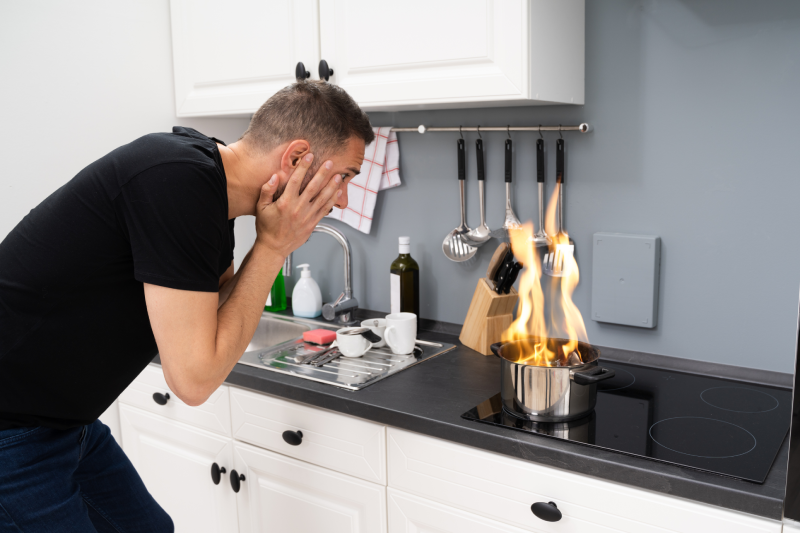
To detect a gas leak, use your senses: a rotten egg or sulfur odor from the added mercaptan, a hissing sound near a gas line or appliance, or dead vegetation outside near the line. If you smell gas strongly, do not investigate. Leave immediately, avoid light switches and phones, and call 911 and your gas utility from outside. A soap bubble test can find a tiny suspected leak.
Knowing how to detect a gas leak in your house can protect your family, but the most important rule comes first: if you suspect a significant leak, get out and call for help before you do anything else. This guide covers the signs of a gas leak, the safe way to respond, and when to bring in a licensed plumber.
Safety First: If You Smell Gas, Leave Now
If you smell a strong gas odor, treat it as an emergency. Federal pipeline-safety guidance is clear: leave the area on foot immediately, do not try to find the source, do not operate any light switches, appliances, or valves, and call 911 from a safe location, then notify your gas utility (Source: Pipeline and Hazardous Materials Safety Administration). Do not light a match, start a car, or use a phone inside, since any spark can ignite the gas. Do not try to extinguish a gas fire yourself.
The detection methods below are for confirming a faint or suspected leak. They are not for a situation where you already smell strong gas. In that case, the only step is to get out and call.
The Signs of a Gas Leak
Here is how to tell if you have a gas leak. These gas leak detection signs are the core of how to detect a gas leak in house and yard before it becomes dangerous.
Natural gas is naturally colorless and odorless, so utilities add an odorant called mercaptan that smells like rotten eggs to warn you of a leak (Source: Pipeline and Hazardous Materials Safety Administration). Watch for these natural gas leak symptoms.
| Sense | Sign of a Gas Leak |
|---|---|
| Smell | A rotten egg or sulfur odor (the mercaptan odorant) |
| Sound | A hissing or roaring sound near a line, meter, or appliance |
| Sight | Dead or discolored plants, blowing dirt, or bubbling in standing water outside |
| Bills | An unexplained jump in your gas bill |
| Body | Headache, dizziness, nausea, or fatigue that eases when you leave the house |
If you notice several of these, especially the rotten egg odor, treat it as a leak and follow the safety steps above.
The Soap Bubble Test for a Tiny Suspected Leak
If you suspect a very small leak at a specific fitting and do not smell strong gas, a soap bubble test can confirm it. Mix dish soap and water, brush or spray it onto the suspected connection or fitting, and watch. Bubbles forming at the joint mean gas is escaping there. This is useful for a connection you can reach safely, such as behind a stove, but it does not replace a professional inspection, and it is never the right move if you already smell strong gas.
What to Do After the Emergency Is Handled
Once 911 and the gas utility have made the area safe, the leak still has to be located and repaired. Gas line work is dangerous and code-regulated, so it should be done by a licensed plumber, not a DIY fix. A professional can pressure-test the system, pinpoint the leak, and repair or replace the affected line correctly.
Preventing Gas Leaks
- Have gas appliances and connections inspected periodically.
- Watch for an orange or yellow flame on a gas appliance, which can signal a problem; a healthy flame is mostly blue.
- Do not store flammable products near gas appliances.
- Call 811 before any digging so you do not strike a buried gas line.
- Consider a natural gas detector as an added early warning.
More Questions Homeowners Ask
What does a gas leak smell like?
Rotten eggs or sulfur. Natural gas is odorless, so utilities add mercaptan to give it that warning smell (Source: Pipeline and Hazardous Materials Safety Administration).
What should I do first if I smell gas?
Leave the house immediately on foot, avoid switches and phones, and call 911 from outside, then your gas utility. Do not try to find the leak.
Can I find a gas leak myself?
For a faint, specific suspected leak you can use a soap bubble test on a reachable fitting. If you smell strong gas, do not investigate; leave and call for help.
Is a gas leak dangerous even if it is small?
Yes. Natural gas is flammable and can build up, so any suspected leak should be taken seriously and repaired by a licensed professional.
Why is my gas bill suddenly higher?
A leak is one possible cause, along with heavier appliance use. If a higher bill comes with any odor or hissing, treat it as a possible leak.
Key Facts at a Glance
- The clearest sign of a gas leak is a rotten egg or sulfur odor from the added mercaptan (Source: Pipeline and Hazardous Materials Safety Administration).
- If you smell strong gas, leave immediately, avoid sparks, and call 911 from outside (Source: Pipeline and Hazardous Materials Safety Administration).
- Other signs include a hissing sound, dead vegetation, and physical symptoms that ease when you leave.
- A soap bubble test can confirm a tiny leak at a reachable fitting, but never when strong gas is present.
- Gas line repair must be done by a licensed plumber.
- Call 811 before digging to avoid striking a buried gas line.
Stay Safe, Then Call a Licensed Salt Lake City Plumber
Detecting a gas leak early protects your home, but safety always comes first: if you smell gas, get out and call 911. Once the emergency is handled, a licensed plumber can find and repair the leak so it does not come back.
Hale Home Services has served Salt Lake City homeowners for over a decade with licensed plumbers and 24/7 availability. After the area is safe, call 385-853-7378 or visit our plumbing services page for professional gas line inspection and repair.
Keep reading:
