

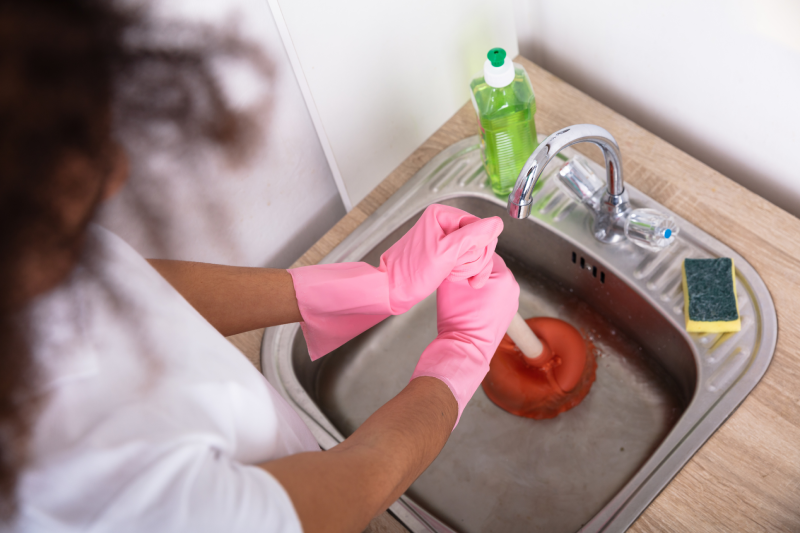
To clear a clogged kitchen sink, start with a plunger, then check and clean the P-trap under the sink, the most common spot for food debris and grease to collect. Boiling water and a baking soda and vinegar flush help break down grease. Avoid chemical drain cleaners. If the sink keeps clogging, the blockage is deeper and needs a plumber.
A clogged kitchen sink is one of the most common plumbing headaches, and most clogs come down to the same culprits: grease and food debris. This guide shows how to clear a clogged kitchen sink step by step, which methods to skip, and why Salt Lake City’s hard water makes kitchen clogs worse. These steps to unclog kitchen sink drains work for most clogs, and we will also cover how to fix a clogged kitchen sink that keeps coming back.
What Causes a Kitchen Sink to Clog?
Most kitchen sink clogs are caused by grease and food debris building up in the drain and P-trap. Grease is a bigger problem than most people realize. The U.S. Environmental Protection Agency reports that fats, oils, and grease are a leading cause of sewer blockages, and a garbage disposal does not prevent it, since the disposal only shreds food while grease still coats the pipe (Source: U.S. Environmental Protection Agency). Coffee grounds, starchy foods, and fibrous scraps add to the problem. Unlike a commercial kitchen with a grease trap, a home sink has no such barrier, so fats, oils, and grease head straight into the P-trap and pipe.
How to Clear a Clogged Kitchen Sink Step by Step
These clogged kitchen sink remedies work for most everyday blockages. Try them in order.
- Clear standing water and try a plunger. Use a cup plunger over the drain, seal the overflow or the second basin, and plunge firmly for 20 to 30 seconds. The plunger method dislodges many soft clogs.
- Flush with boiling water. For grease, pour a kettle of boiling water down the drain in stages. This softens and moves grease that is coating the pipe.
- Try baking soda and vinegar. Pour half a cup of baking soda, then half a cup of vinegar, wait 10 to 15 minutes, then flush with hot water. This helps break down grease and freshen the drain.
- Check the garbage disposal. If you have one, make sure it is not jammed, and run it with cold water to confirm it is clearing.
- Clean the P-trap. Place a bucket under the curved P-trap pipe beneath the sink, unscrew the slip nuts, and remove the trap. This is where food debris and grease collect most. Clean it out, check the trap arm, and reassemble.
- Snake the drain. If the clog is past the trap, feed a small hand auger into the pipe to break it up.
If the sink is still not draining after the P-trap and a snake, the blockage is deeper in the line and it is time to call a plumber.
What to Avoid
- Chemical drain cleaners. They can damage pipes, especially older ones, and often do not reach the clog. A mechanical or water-based method is safer.
- Pouring grease down the drain. Even with hot water, grease cools and solidifies in the pipe, so collect it in a can and trash it instead.
- Relying on the disposal for grease. It shreds food but does not stop grease from coating the pipe.
Why Salt Lake City Kitchens Clog More
Salt Lake City’s water is very hard, commonly around 13 grains per gallon, which the U.S. Geological Survey classifies as very hard (Source: U.S. Geological Survey). Hard-water minerals leave scale inside drain pipes, narrowing them and giving grease and food debris more to cling to. That is why a kitchen sink not draining is often a recurring problem in SLC homes, and why clearing the grease and scale matters, not just the surface clog.
More Questions Homeowners Ask
What is the fastest way to unclog a kitchen sink?
A plunger handles most soft clogs in under a minute. If that fails, cleaning the P-trap is the next fastest fix, since that is where food debris collects.
Why does my kitchen sink keep clogging?
Usually grease and food debris, made worse by hard-water scale narrowing the pipe. If it keeps returning, the buildup is deeper in the line.
Should I use a chemical drain cleaner?
No. Chemical cleaners can damage pipes and often do not reach the clog. Use a plunger, P-trap cleaning, or a snake instead.
Where is the P-trap?
It is the curved pipe directly under the sink. It traps debris and sewer gas, and it is the most common spot for a kitchen clog.
When should I call a plumber?
If the sink still clogs after cleaning the P-trap and snaking, multiple drains are slow, or water backs up into other fixtures, the blockage is deeper and needs professional drain cleaning.
Key Facts at a Glance
- Start with a plunger, then clean the P-trap, the most common clog spot.
- Fats, oils, and grease are a leading cause of drain and sewer blockages (Source: U.S. Environmental Protection Agency).
- A garbage disposal shreds food but does not stop grease from clogging the pipe.
- Avoid chemical drain cleaners, which can damage pipes.
- Salt Lake City’s very hard water builds scale that narrows drains (Source: U.S. Geological Survey).
- Recurring clogs or backups in other fixtures mean a deeper blockage.
Get Your Kitchen Draining Again in Salt Lake City
Most kitchen clogs clear with a plunger and a clean P-trap. But if your sink keeps backing up, the real problem is grease and scale deeper in the line, which is exactly what professional drain cleaning is for.
Hale Home Services has served Salt Lake City homeowners for over a decade with licensed plumbers and 24/7 availability. Call 385-853-7378 or visit our drain cleaning page for a stubborn or recurring clog.
Keep reading:
