
Electric Tankless Water Heater Installation
You’ve done the research. You know a tankless water heater saves energy, takes up less space, and delivers hot water on demand. You’re ready to make the switch. So you order the unit — and then the electrician shows up, takes one look at your panel, and tells you that your home can’t support it without a $1,500 electrical upgrade you weren’t expecting.
This scenario plays out more often than any manufacturer’s product page will tell you.
Electric tankless water heaters are genuinely excellent technology — but they are also among the most electrically demanding appliances a residential home can run. Getting the installation right isn’t just a matter of following instructions. It requires understanding your home’s actual electrical capacity, your local plumbing configuration, your local building codes, and the specific demands of the unit you’re purchasing.
This electric tankless water heater installation guide covers every electric tankless water heater installation requirement you need to verify — electrical, plumbing, structural, and code — before the unit ships, before the contractor arrives, and before you commit to any specific model. By the end, you’ll know exactly what questions to ask and what to check.
What Are Electric Tankless Water Heater Installation Requirements?
Electric tankless water heater installation requirements refer to the full set of electrical, plumbing, structural, and code conditions that must be met for a unit to operate safely, efficiently, and legally in a residential home.
Unlike traditional tank heaters — which store pre-heated water and draw modest, consistent power — electric tankless units heat water instantly on demand. That instantaneous heating process requires a large burst of electrical power, which places specific, non-negotiable demands on your home’s infrastructure.
These requirements fall into four categories:
| Requirement Category | What It Covers |
| Electrical | Panel capacity, dedicated circuits, breaker sizing, wire gauge |
| Plumbing | Inlet/outlet sizing, flow rate, pressure, shut-off valves |
| Structural / Location | Clearances, mounting surface, proximity to point of use |
| Code & Permits | Local building codes, NEC compliance, licensed installation |
Meeting all four categories is what separates a safe, high-performing installation from one that trips breakers, delivers lukewarm water, or fails inspection.
Many of the performance problems homeowners experience—like inconsistent temperatures or system strain—are similar to other common plumbing issues in Salt Lake City homes. Understanding the root cause early helps prevent costly repairs later.
Why Electric Tankless Water Heater Installation Requirements Matter More Than Most Homeowners Realize
The appeal of going tankless is real: on-demand hot water, a smaller footprint, longer equipment lifespan (20+ years vs. 10–12 for tank units), and energy savings of 24–34% for homes that use 41 gallons or less per day, according to the U.S. Department of Energy.
But that efficiency only materializes when the installation is matched to the home. A unit installed in a home with inadequate electrical infrastructure will:
- Trip breakers repeatedly under normal use loads
- Deliver inconsistent water temperatures as the unit throttles down to protect the circuit
- Fail prematurely due to thermal stress from operating outside its design parameters
- Void the manufacturer warranty — most manufacturers require professional, code-compliant installation
- Fail municipal inspection if permits were pulled, creating legal liability for the homeowner
“An electric tankless water heater is only as capable as the electrical system behind it. The unit doesn’t create capacity — it reveals what was already there.”
Understanding the home electrical requirements for tankless water heaters before purchase is the difference between a seamless upgrade and a costly rework.
The 5 Critical Electric Tankless Water Heater Installation Requirements to Verify
1. Electrical Panel Capacity — The First and Most Important Check
Every electric tankless water heater installation requirement starts here: does your electrical panel have enough capacity?
Most whole-home electric tankless units require 150–200 amps of dedicated electrical service — in addition to everything else your home already runs. The average US home has a 100–200 amp main panel. If you’re in a home with a 100-amp panel and you’re already running HVAC, an electric range, a clothes dryer, and an EV charger, your panel may have no headroom left.
Here’s how to think about it:
- Small point-of-use units (1–3 kW): May run on a single 30-amp, 240V circuit. Suitable for a single sink.
- Mid-size units (18–27 kW): Typically require 2–3 dedicated 40–60 amp, 240V double-pole breakers.
- Whole-home units (27–36 kW): May require 3–4 dedicated circuits, totaling 125–150 amps of new load.
Before purchasing any unit, have a licensed electrician perform a load calculation on your panel. This determines your current draw under normal conditions and how much headroom exists for new load. If a panel upgrade is needed, budget $1,500–$3,500 for a 200-amp service upgrade — a cost that doesn’t appear in any product listing.
2. Tankless Water Heater Electrical Requirements — Amps, Breaker Size, and Wire Gauge
This is where the specifics live. Tankless water heater electrical requirements for amperage, breaker sizing, and wire gauge must be matched precisely — both to the unit’s specifications and to the National Electrical Code (NEC).
Breaker sizing follows NEC guidelines: a continuous-load appliance (which a water heater is) must be rated at 125% of the unit’s continuous draw. So a unit that draws 100 amps continuously requires a 125-amp breaker.
Wire gauge must match the circuit’s amperage:
| Circuit Amperage | Required Wire Gauge (Copper) |
| 30A | 10 AWG |
| 40A | 8 AWG |
| 50A | 6 AWG |
| 60A | 4 AWG |
| 100A+ | 2 AWG or larger |
Using undersized wire is a fire hazard. Using oversized breakers for existing wire gauges is equally dangerous — the breaker won’t trip when the wire overheats. This is not a place for approximation.
Voltage requirements:
Nearly all residential electric tankless units require 240V service (not 120V). Verify that 240V circuits are available or can be run from your panel to the installation location.
Dedicated circuits:
Each circuit feeding the water heater must be dedicated — meaning no other appliances share that breaker. This is both a code requirement and a functional necessity; sharing a circuit will cause nuisance tripping and potentially damage the unit’s heating elements.
3. Tankless Water Heater Wiring and Voltage Requirements — The Installation Details
Beyond the panel and breaker specifics, tankless water heater wiring and voltage requirements at the unit level include:
Wiring configuration:
Most whole-home units require multiple separate feeds (sometimes called “legs”), each bringing power to a different bank of heating elements. These aren’t connected in series at the unit — each feed is independent. Your electrician must run the correct number of home runs from the panel.
Terminal block connections:
Inside the unit, wire connections to the terminal block must use the manufacturer-specified wire type (typically THHN/THWN-2 rated for the temperature), proper torque on terminal screws (over-tightening or under-tightening both create failure points), and correct polarity.
Conduit requirements:
Local codes vary on whether wiring must be in conduit. In wet or potentially wet locations (basements, utility rooms, garages), conduit is typically required. Check your local jurisdiction.
Disconnect switch:
The NEC requires a readily accessible disconnect within sight of the water heater. This is often a simple safety switch mounted near the unit — but it must be included in the installation.
This level of detail is why electric tankless water heater installations are not DIY-appropriate in most cases and why “how to install electric tankless water heater safely” almost always leads to the same answer: hire a licensed electrician and a licensed plumber, pull permits, and have the work inspected.
4. Electric Tankless Water Heater Plumbing Requirements
The electrical side gets most of the attention, but the electric tankless heater plumbing requirements are equally non-negotiable.
Flow Rate and Inlet Pressure:
- Minimum flow rate to activate most units: 0.5–0.75 GPM (gallons per minute)
- Recommended inlet water pressure: 30–150 PSI
- If your home’s water pressure exceeds 80 PSI, a pressure-reducing valve (PRV) is required — both to protect the unit and to comply with most local codes
Proper plumbing setup also plays a major role in long-term reliability, much like routine sewer line maintenance in Salt Lake City, which helps prevent hidden issues that can impact your entire plumbing system.
Inlet and Outlet Connection Sizing:
Most whole-home units use ¾-inch NPT connections. Point-of-use units may use a ½ inch. Your existing plumbing must match, or adapters and short runs of new pipe must be installed.
Isolation Valves:
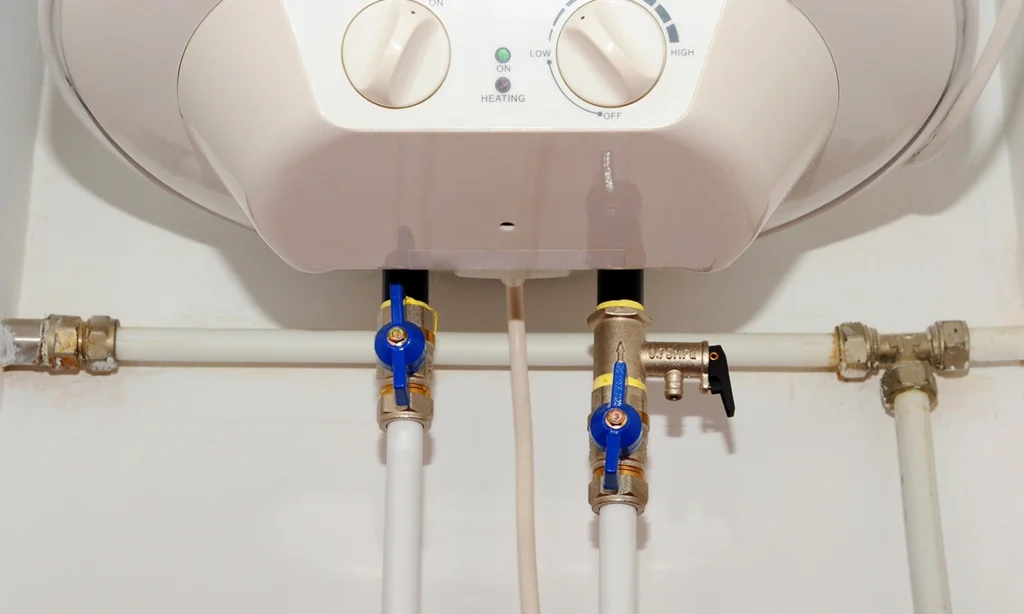
A cold-water isolation valve (with a built-in filter/screen) and a hot-water isolation valve must be installed on the inlet and outlet, respectively. These allow the unit to be serviced or replaced without shutting off water to the entire home.
Expansion Tank and Pressure Relief Valve:
A temperature and pressure relief (T&P) valve is required by code on all water heaters. The discharge pipe must terminate within 6 inches of the floor or into an appropriate drain — not just hang in the air.
Water Hardness:
In areas with hard water (above 7 grains per gallon), scale buildup inside the heating elements is accelerated. A descaling maintenance schedule — or an upstream water softener — is critical to protecting the unit’s lifespan. The Water Quality Association provides water hardness maps by region.
5. Location, Clearances, and Local Code Compliance
Requirements for installing an electric tankless water heater include physical location criteria that affect both performance and code compliance.
Clearance requirements vary by manufacturer but generally include:
- Minimum clearance above unit: 12 inches
- Minimum clearance on sides: 1–2 inches
- Must not be installed in areas that reach freezing temperatures (no uninsulated exterior walls, unheated garages in cold climates, etc.)
This is why working with experts matters—understanding the role of professional plumbers in home renovations in Salt Lake City ensures your installation meets both safety standards and long-term performance expectations.
Location relative to point of use: Unlike gas tankless units, electric models don’t require venting — which gives more flexibility. However, the longer the distance between the heater and the faucet, the more cold water must be purged before hot arrives. For whole-home replacement, a central location minimizes wait time and heat loss across long pipe runs.
Permit requirements: In virtually every US jurisdiction, replacing or installing a water heater requires a building permit. A permit means a licensed contractor must perform or supervise the work, and a municipal inspector must sign off on completion. Unpermitted water heater installations can complicate home sales, void insurance claims, and create safety liability. Hale Home Services handles permits as part of every water heater installation — it’s not an optional add-on.
What Most Installation Guides Don’t Tell You — The Hidden Complexity
Here’s what rarely makes it into manufacturer documentation or standard installation guides:
The “cold climate compensation” problem: In northern states, groundwater temperature in winter can drop to 35–45°F. An electric tankless unit sized for a 70°F temperature rise at 2 GPM in warm climates may only deliver 1.2 GPM at the same rise in winter — meaning you get a trickle, not a shower. Sizing must account for your coldest groundwater temperature, not your average.
Simultaneous use stacking: A single whole-home unit handles one or two fixtures comfortably. When two showers, a dishwasher, and a washing machine run simultaneously, flow demand can exceed the unit’s rated output. Undersized units throttle temperature, not flow — meaning all the water gets warm, not hot. Whole-home installations often require two units in parallel for larger households.
The “modulating” vs. “non-modulating” distinction: Non-modulating units turn on at full power or not at all—they don’t ramp down for low-flow demand. This causes two problems: nuisance tripping at low draw and a “cold water sandwich” effect (a burst of cold water between uses). Modulating units adjust element output to match flow—better performance but higher cost. This distinction is almost never explained at the point of sale.
Grounding requirements often overlooked: Electric tankless units must be properly grounded per NEC Article 250. In older homes with two-prong outlets or ungrounded wiring, the grounding infrastructure may need to be extended to the installation location — an additional cost.
For a professional assessment of whether your home is ready—electrical system, plumbing, and all — reach out to the team at Hale Home Services before purchasing your unit.
Electric Tankless Water Heater Installation Cost Breakdown
Understanding the requirements also means understanding the realistic cost of meeting them. Here’s what a complete, code-compliant electric tankless installation typically costs in 2026:
| Component | Estimated Cost Range |
| Unit itself (whole-home, 18–36 kW) | $500 – $1,500 |
| Electrical labor (wiring, breakers, disconnect) | $300 – $900 |
| Panel upgrade (if needed) | $1,500 – $3,500 |
| Plumbing connections, valves, T&P | $150 – $400 |
| Permit fees | $50 – $300 |
| Total (no panel upgrade) | $1,000 – $3,100 |
| Total (with panel upgrade) | $2,500 – $6,000+ |
Point-of-use units for a single fixture run $200–$700 installed — far less disruptive, but limited in scope.
The U.S. Department of Energy notes that while upfront costs are higher than tank heaters, energy savings of $100–$400/year make the math favorable over a 10–15 year window — provided the unit is correctly sized and installed.
For a ballpark specific to your home, Hale Home Services offers free water heater consultations that assess both your electrical and plumbing readiness before you buy.
Real Questions, Direct Answers
What electrical requirements does an electric tankless water heater need?
Most whole-home electric tankless units need 240V service, two to four dedicated double-pole breakers ranging from 30 to 60 amps each, and wire gauge matched to the circuit amperage. Total electrical demand often reaches 100–150 amps. Your panel must have available capacity before installation can proceed.
What size breaker do I need for an electric tankless water heater?
Breaker size depends on the unit’s kilowatt rating. A 36 kW unit drawing 150 amps at 240V typically needs three 60-amp double-pole breakers. The NEC requires breakers rated at 125% of continuous load. Always refer to your specific unit’s installation manual for exact specifications — there’s no universal answer.
Can I install an electric tankless water heater myself?
In most US jurisdictions, installing a water heater requires a permit and licensed contractor sign-off. Beyond legal requirements, the electrical work involved — panel load calculations, dedicated circuit runs, properly torqued terminal connections — carries serious fire and electrocution risk when done incorrectly. Professional installation is strongly recommended.
How much does it cost to upgrade electrical panel for tankless water heater?
A 200-amp panel upgrade to support an electric tankless heater typically costs between $1,500 and $3,500, depending on your region and whether a new meter base is required. This cost is separate from the heater and installation labor. Get a load calculation done before purchasing the unit.
Do electric tankless water heaters need special plumbing?
Yes. They require correctly sized inlet and outlet connections (typically ¾-inch), isolation valves on both sides, a temperature and pressure relief valve with a proper discharge pipe, and adequate water pressure (30–150 PSI). In hard water areas, a sediment filter on the cold inlet is also strongly recommended.
Will an electric tankless water heater work in cold climates?
Yes, but sizing must account for cold groundwater temperatures. Incoming water at 40°F in winter requires a larger temperature rise than the same unit handles in summer. Units must be sized for the coldest seasonal groundwater temperature in your area — not the annual average. Undersized units will underperform significantly in winter months.
Get the Requirements Right Before You Get the Unit
Electric tankless water heater installation requirements exist for a reason: these are high-demand appliances operating at the edge of what most residential electrical systems are designed to handle. Getting it right means hot water on demand, lower energy bills, and a 20-year appliance lifespan. Getting it wrong means breaker trips, lukewarm showers, failed inspections, and a reinstall that costs more than the original job.
The sequence matters: assess first, purchase second, install third.
Check your panel capacity. Understand your amps and breaker size needs. Verify your plumbing connections and water pressure. Confirm local permit requirements. Then choose a unit sized to your actual household demand and groundwater temperature—not just the square footage on the box.
“The unit doesn’t determine the outcome. The infrastructure does. A $1,200 heater installed into a properly prepared home outperforms a $1,800 unit dropped into one that wasn’t ready.”
If you’re unsure whether your home meets the electrical and plumbing requirements for a tankless upgrade, the licensed technicians at Hale Home Services can perform a full readiness assessment — electrical load, plumbing configuration, and local code review — so you go in with your eyes open.
Schedule your water heater consultation before you buy.
FAQ: Questions About Electric Tankless Installation
Q1: Can I add circuits to my existing panel, or do I need a full upgrade? It depends on your panel’s available slot count and its total rated ampacity. A 200-amp panel with open slots may accommodate additional circuits without a full upgrade. A 100-amp panel that’s nearly full will typically need to be replaced. Have a licensed electrician pull your panel cover and assess — this takes about 30 minutes and can save thousands in surprises.
Q2: What happens if my electric tankless water heater is undersized? An undersized unit won’t heat water to the target temperature at your home’s full flow demand. Most units modulate element output rather than restrict flow — meaning all your hot water outlets get lukewarm simultaneously during peak use. The fix is either a larger unit, a second unit in parallel, or a usage management strategy.
Q3: Does a tankless water heater need its own disconnect switch?
Yes. The NEC requires an accessible disconnect within sight of the appliance. This is typically a simple 240V safety switch mounted near the unit. It must be rated for the full amperage of the circuit and accessible without moving the appliance.
Q4: Can an electric tankless heater be installed in a garage or crawl space?
In climate-controlled garages, yes. In unheated spaces subject to freezing, no — frozen inlet water will damage the heating elements and void the warranty. If an unheated location is the only option, the supply line must be insulated and a freeze protection kit installed, where available for the model.
Q5: How often does an electric tankless water heater need maintenance?
Annual flushing with a descaling solution (white vinegar or citric acid) is recommended in areas with hard water. The cold-water inlet filter screen should be cleaned every 6–12 months. Beyond that, electric units have no combustion components, so they require significantly less maintenance than gas models.
Q6: Will my electricity bill go up significantly after installing a tankless heater?
Your bill may actually decrease if you’re replacing an older tank heater. Tankless units don’t maintain standby heat — they only draw power when hot water is flowing. The DOE estimates 24–34% energy savings for homes using under 41 gallons/day. High-use households see smaller percentage savings, but rarely an increase.
Q7: Do I need a water softener before installing an electric tankless heater?
Not required, but strongly recommended in areas with hard water (7+ grains per gallon). Mineral scale on heating elements reduces efficiency and causes premature failure. Most manufacturers recommend softening or at minimum a polyphosphate treatment system upstream of the unit.
Q8: What’s the difference between a point-of-use and whole-home electric tankless unit? Point-of-use units (1–7 kW) serve a single fixture—ideal for a sink, a remote bathroom, or a supplemental application. Whole-home units (18–36 kW) are designed to supply the entire house and require substantial electrical infrastructure. They’re different product categories with different electrical demands and installation complexities.
Q9: How long does a professional electric tankless installation take?
A straightforward installation — where the panel is already adequate and plumbing connections are accessible — typically takes 4–6 hours. If electrical upgrades are needed, add another 4–8 hours for panel work. Full installations requiring panel upgrades may span two days.
Q10: Is an electric tankless water heater better than gas for my home?
It depends on your utility rates and existing infrastructure. Electric units are more energy-efficient at the point of use (99% vs. 80–85% for gas), but electricity costs more per BTU in most US markets. If you have natural gas service and an adequate gas line, a gas tankless unit may offer lower operating costs. If you don’t have gas service, electricity is almost always the better choice — no gas line installation required.