

White crust around faucets. Cloudy spots on shower glass. Dishes that never seem completely clear. In Utah, those annoyances often point to mineral-heavy water.
That does not mean every home needs a large treatment system. But when hardness shows up at several fixtures, a whole-house water softener for hard water can treat the supply before it reaches the rest of the plumbing.
The useful questions are how hard the incoming water is, how much of the house is affected, and what you want the system to change.
Why Utah Homes Notice Hard Water
Hard water contains dissolved calcium and magnesium. These minerals are not the same as unsafe drinking-water contaminants, but they can leave scale on fixtures and inside water-using equipment.
Salt Lake City Public Utilities notes that groundwater is harder because it carries more minerals, and city data shows hardness varies by source.
A whole-house water softener for hard water deals with that mineral load where water enters the house. Hale’s guide to hard water effects explains how scale can affect plumbing, fixtures, and appliances.
What Does a Whole House Water Softener Do?
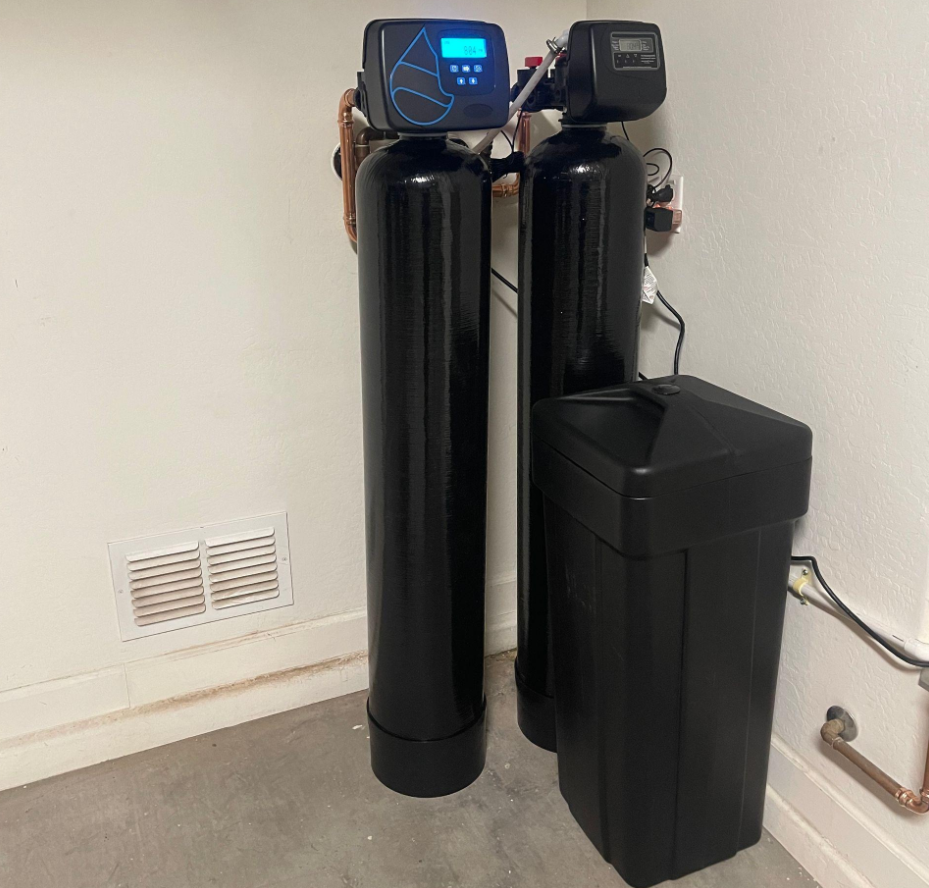
A traditional whole house water softener uses ion exchange. Water moves through resin that attracts calcium and magnesium before the treated supply continues through the home.
Because the unit sits on the main supply, a whole house water softener for hard water can serve bathrooms, laundry, the water heater, and other connected indoor fixtures.
That is different from treating one sink. A point-of-use product may change water at a single faucet, but it does not address scale at the shower, washing machine, or water heater.
A whole-home water softener makes the most sense when the problem is genuinely house-wide.
Signs Whole-House Treatment May Make Sense
Do not buy a system simply because a neighbor has one. Look at your own house.
A whole-house water softener for hard water may be worth considering when several of these keep showing up:
- chalky deposits around faucets or showerheads
- white spotting on glassware
- mineral residue on shower doors and sinks
- soap that does not lather as expected
- scale around the water heater or other appliances
One stained faucet is not enough to diagnose a whole-house problem. When the pattern appears in several rooms, testing the hardness gives you a better basis for choosing treatment.
Water Softener for Hard Water vs. Water Filter
These are not interchangeable products.
A water softener is designed primarily to reduce calcium and magnesium. Sediment and carbon filters address different water-quality concerns.
That is why the best water softener for hard water is not necessarily the one with the longest list of filtration claims. It is the one that fits the home’s measured hardness, water demand, and required flow rate.
Salt-free conditioners are another option. They generally change how hardness minerals behave rather than removing them through conventional ion exchange. Before comparing quotes, make sure you know whether you are being offered a softener, conditioner, or filtration system.
How to Choose a Whole House Water Softener for Hard Water
Start with the house, not the brand.
Test the Incoming Water
A whole house water softener for hard water should be sized using the actual hardness of the supply. A citywide average provides context, but your home’s water may differ.
Account for Household Demand
A two-person household has different peak demand from a family running several showers, laundry, and appliances at once.
The whole-house water softener needs enough capacity and flow to serve the property without creating noticeable pressure problems.
Decide Which Water Needs Treatment
Indoor fixtures, laundry, and the water heater are usually the priority. Outdoor irrigation may not need softened water.
This is one reason whole house water softener installation should be planned around the plumbing layout rather than treated like buying a standalone appliance.
What Does Whole House Water Softener Installation Involve?
A whole house water softener installation connects the system to the main water supply where treated water can reach the intended indoor plumbing.
The job depends on existing pipework, available space, drainage, electrical access, and whether the home already has a softener loop or bypass.
If the house has never had a system, have the plumbing assessed before buying equipment. A whole house water softener for hard water only performs as well as its sizing and installation allow.
How Much Does a Whole House Water Softener Cost?
There is no single whole house water softener cost for every Utah home.
Capacity, system type, plumbing modifications, and installation difficulty all affect the price. A home with an existing softener loop is a different job from one that needs new pipework or drainage.
Compare quotes by what is included rather than equipment price alone. A correctly selected system should fit the home’s hardness and demand, not simply the cheapest price point.
Is a Whole House Water Softener Worth It?
That depends on what hard water is doing in the house.
If you are constantly removing scale from several fixtures and fighting spotting in multiple rooms, treating one faucet will not solve the broader problem. A whole-house water softener for hard water addresses the supply before those minerals reach the affected fixtures.
If the water is only mildly hard and the symptoms do not bother you, the decision may be different. Testing first is more useful than treating a whole house based on assumptions.
Choosing a Water Softener in Salt Lake City
When comparing a water softener, Salt Lake City homeowners should start with local water conditions and the property’s plumbing.
Hale Home Services works with residential plumbing systems across the Salt Lake area and can evaluate whether a whole-house water softener for hard water matches the problem you are seeing. The goal is enough capacity for the home without paying for a system larger or more complicated than necessary.
Frequently Asked Questions
Do I need a whole-house water softener if I have hard water?
Not automatically. Test the water and consider whether hardness is creating problems throughout the house. Widespread scale and spotting make a whole-house water softener for hard water more relevant than a single-fixture solution.
What is the difference between a whole house water softener and a whole home water softener?
In normal residential use, the terms usually describe the same idea: treating the main supply so softened water reaches most or all indoor fixtures.
What is the best water softener for hard water?
The best water softener for hard water is one sized for measured hardness, household demand, and flow requirements. Brand alone does not determine whether the system is a good fit.
Can a whole-house system reduce scale?
A traditional water softener removes calcium and magnesium through ion exchange, reducing the minerals available to form scale in treated plumbing.
How much does a whole-house water softener cost?
Whole-house water softener cost varies with capacity, system type, plumbing layout, and installation requirements. An in-home assessment gives a more useful figure than a generic average.
Should I test my water before choosing a system?
Yes. Hardness is one of the main factors used to size a whole-house water softener for hard water correctly.
Make the Decision Based on Your Water
A properly sized whole-house water softener for hard water can make sense when mineral buildup is a recurring problem throughout the home. Before choosing equipment, confirm the hardness level, consider household demand, and make sure the installation plan fits the plumbing.
Hale Home Services can assess your home’s water and plumbing and explain the available options through its plumbing services. Schedule a service visit to find out whether whole-house softening is the right fit for your home.
