
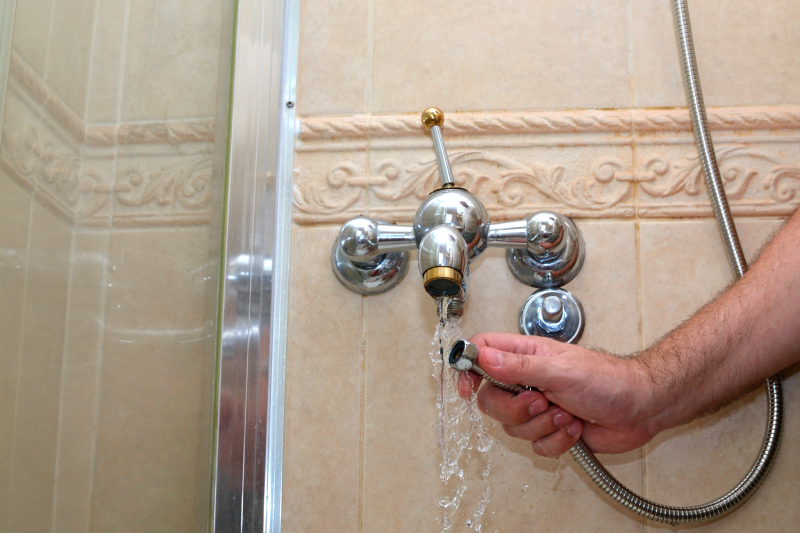
Water pressure is the force that moves water through your home’s pipes. When it is too low, faucets may trickle, showers feel weak, and appliances may fill slowly. When it is too high, pipes and fixtures can experience unnecessary stress. Most homes perform well around 40–60 PSI, but the right solution depends on the cause.
What Causes Low Water Pressure in a House?
Low water pressure in house plumbing can come from a restriction, leak, valve problem, pressure regulator issue, or the incoming water supply.
Clogged or Corroded Water Pipes
Mineral deposits and corrosion can narrow pipes and reduce flow. Homes with hard water buildup may gradually notice weaker pressure at several fixtures.
Plumbing Leaks and Low Water Pressure
A leak allows water to escape before it reaches faucets and appliances. Hidden leaks may also show up as damp areas, water stains, or unexplained increases in water use.
Main Water Valve or Pressure Regulator Problems
A partially closed main shut-off valve can restrict flow throughout the home. A failing pressure regulator can also leave pressure too low or too high.
Why Is the Water Pressure in My House Suddenly Low?
Low water pressure in the house suddenly appearing can point to a new leak, a moved valve, regulator failure, a clogged fixture, or a temporary municipal supply issue.
Low Water Pressure at One Fixture vs. the Whole House
If one faucet or shower has weak flow, inspect its aerator, showerhead, cartridge, and local shut-off valve. If every fixture is affected, check the main supply, regulator, leaks, or wider pipe restrictions.
Signs of a Whole-House Water Pressure Problem
Weak flow at several fixtures, slow-filling toilets, or multiple appliances filling slowly can indicate a whole-house problem.
How to Perform a Water Pressure Test at Home
A water pressure test can help determine whether the problem affects the supply rather than a single fixture.
How to Test Water Pressure With a Gauge
Attach a pressure gauge to an outdoor hose bib or another suitable threaded connection. Turn off water-using fixtures and appliances, open the connection fully, and read the gauge according to its instructions.
What Do Low or High Water Pressure Readings Mean?
Hale’s existing guidance places typical home water pressure around 40–60 PSI. A lower reading can help confirm low pressure, while pressure above 80 PSI is considered excessively high.
How to Increase Home Water Pressure
If you want to know how to increase home water pressure, identify the cause before adjusting anything. Increasing regulator settings will not solve a clogged pipe, leak, or restricted fixture.
How to Increase House Water Pressure
Check that the main valve is fully open, clean clogged aerators and showerheads, inspect for leaks, and test system pressure. If the regulator is set too low or failing, adjustment or replacement may be necessary.
How to Improve Water Faucet Pressure
For weak water faucet pressure at one fixture, clean the aerator, check the cartridge, and make sure its shut-off valves are open. Mineral deposits commonly restrict faucet flow.
Check for Leaks, Clogged Pipes, and Pressure Regulator Problems
If several fixtures remain weak, look beyond the faucet. Pipe corrosion, hard water buildup, hidden leaks, or pressure regulator problems may need professional repair.
What Causes High Water Pressure in a House?
What causes high water pressure in house plumbing? Common causes include excessive municipal supply pressure, a faulty pressure regulator, and thermal expansion in a closed system.
Water Pressure Regulator Problems
A regulator that is incorrectly adjusted or failing can allow excessive pressure into the home.
Changes in the Incoming Water Supply
Municipal pressure can change. If nearby homes experience similar pressure changes, the issue may be outside your plumbing system.
What Problems Can High Water Pressure Cause?
High water pressure can put extra stress on pipes, valves, fixtures, appliance connections, and seals.
Stress on Pipes and Plumbing Fixtures
Excess pressure can contribute to banging pipes, noisy fixtures, and unnecessary strain on plumbing components.
Leaks and Premature Fixture Wear
Higher pressure can worsen weak connections and shorten the service life of valves, hoses, and fixture components.
Why Is Faucet Water Pressure Different From the Rest of the House?
Faucet water pressure can be low even when the rest of the home has normal pressure.
What Affects Tap Water Pressure?
Tap water pressure can be affected by a clogged aerator, mineral buildup, worn cartridge, partially closed fixture valve, or local supply restriction.
Low Water Faucet Pressure at One Fixture
When only one fixture has weak water faucet pressure, start with that fixture instead of adjusting whole-house pressure.
What Causes Inconsistent Water Pressure in a House?
Inconsistent water pressure in house plumbing can occur when demand changes or when the supply system cannot maintain stable flow.
Multiple Fixtures Running at the Same Time
Using showers, faucets, washing machines, and other fixtures simultaneously can cause pressure changes, especially with restricted or undersized lines.
Pressure Regulator and Water Supply Problems
A failing regulator or changing municipal supply pressure can make pressure fluctuate even when household demand is similar.
How Pressure in Water Pipes Affects Your Plumbing System
Pressure in water pipes affects fixture performance, appliance operation, and stress on plumbing components. Very low pressure makes everyday use frustrating, while excessive pressure can contribute to leaks and premature wear. Stable pressure helps the system work more predictably.
When Should You Call a Plumber for Water Pressure Problems?
Call a plumber when pressure changes affect the whole home, the regulator appears faulty, you suspect a hidden leak, pipes are corroded, or fixture cleaning does not restore normal flow.
Hale Home Services provides plumbing services for leaks, regulator issues, supply-line restrictions, and other pressure problems. Hale’s guide to common plumbing problems also covers leaks, mineral buildup, and low pressure.
Frequently Asked Questions About Water Pressure
What is normal water pressure for a house?
Hale’s existing guidance identifies about 40–60 PSI as a typical residential range.
What causes low water pressure in a house?
Common causes include leaks, clogged or corroded pipes, partially closed valves, clogged fixtures, regulator problems, and incoming supply issues.
Why is my water pressure suddenly low?
A sudden change can result from a leak, valve movement, regulator failure, fixture blockage, or municipal supply issue.
How can I increase water pressure in my house?
Check valves, clean fixtures, test pressure, and look for leaks or restrictions before considering regulator adjustment.
How do I perform a water pressure test?
Attach a suitable pressure gauge to a hose bib or threaded connection, stop other water use, open the outlet, and read the gauge.
What causes high water pressure in a house?
High municipal pressure, a faulty regulator, or thermal expansion can contribute.
Can high water pressure damage plumbing?
It can increase stress on pipes, fixtures, valves, hoses, and seals and contribute to premature wear.
Why is my faucet water pressure low?
A clogged aerator, mineral buildup, cartridge problem, fixture valve, or local supply restriction may be responsible.
What affects water pressure in a house?
Pipe condition, leaks, valves, fixture restrictions, regulator condition, household demand, and incoming supply all matter.
What causes inconsistent water pressure in a house?
Changing demand, a failing regulator, pipe restrictions, or fluctuations in the incoming supply can cause inconsistent pressure.