

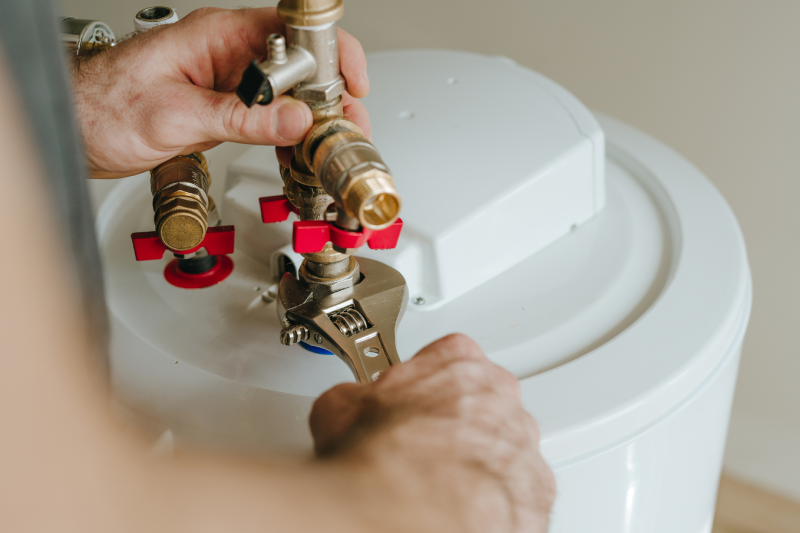
Water Heater Replacement Cost in Utah
It’s 6:30 AM. You turn on the shower and wait. And wait. The water never gets hot. You check the water heater — and it’s either stone cold, leaking from the bottom, or making a sound that tells you the answer before any technician does.
Now you’re standing in your utility room in Salt Lake City, or Provo, or St. George, wondering what this is going to cost — and whether you have any say in that number.
The frustrating reality is that most Utah homeowners walk into a water heater replacement without a single reference point. They get one quote, assume it’s standard, and sign. Sometimes it is fair. Sometimes it isn’t.
This guide gives you the actual 2026 water heater replacement cost Utah homeowners are facing — broken down by unit type, fuel source, installation complexity, and location. Whether you’re trying to understand the hot water heater replacement cost Utah residents typically pay, or you just want to know the average water heater cost in Utah before calling anyone, this is your starting point. You’ll also learn what drives costs up, what you can reasonably negotiate, and what the difference is between a $900 job and a $3,500 job — because both are real and both are common in this state.
What Does Water Heater Replacement in Utah Actually Involve?
When you replace a water heater in Utah, it’s not just swapping one unit for another. A complete residential replacement includes removing and disposing of the old unit, installing the new one with correct connections, bringing the installation up to current code (which may differ from when the original unit was installed), testing operation, and obtaining any required permits.
In many homes, the water heater is part of a larger plumbing and mechanical ecosystem. Understanding how it connects with your home’s full system — including heating and cooling — can help avoid compatibility issues. Learn more about integrated home systems here: plumbing, heating, and cooling services.
In Utah, the Utah Division of Occupational and Professional Licensing (DOPL) requires that water heater installations be performed by a licensed plumber or under the supervision of one. Permits are required in most Utah municipalities — including Salt Lake City, Provo, Ogden, Sandy, and West Jordan — for any water heater replacement. Unpermitted work can create complications during home sales and may void your homeowner’s insurance for water-damage claims.
Here’s a quick overview of what’s included in a standard Utah water heater replacement:
| Task | Included In Standard Replace? |
| Old unit removal & haul-away | Usually yes |
| New unit installation | Yes |
| New supply line connections | Yes |
| T&P valve installation & test | Yes (code required) |
| Permit procurement | Varies by contractor |
| Code upgrades (seismic straps, expansion tank) | Sometimes additional |
| Drain pan installation | Sometimes additional |
Always confirm what’s included before signing an estimate.
Why the Average Water Heater Cost in Utah Varies So Much
Utah homeowners sometimes get quotes ranging from $900 to $3,500 for what seems like the same job. That gap is real — and it’s not all contractor markup. Here’s what’s actually driving it:
Fuel type: Gas water heaters cost more to install than electric due to gas line connection requirements and venting. Tankless units — gas or electric — cost significantly more than traditional tank units.
Unit size and brand tier: A 40-gallon builder-grade electric tank heater costs $400–$600 for the unit. A premium 50-gallon gas unit or a hybrid heat pump water heater runs $800–$1,500 before installation. The new water heater price you see at a box store is only part of the total equation — installation, code upgrades, and permitting all add to the final number.
Location and access: A water heater in an accessible utility room installs quickly. One tucked in a crawl space, attic, or tight closet adds labor time — and cost.
Code upgrades: If your current installation is out of code — missing seismic strapping (required in Utah due to earthquake risk), lacking a proper expansion tank, or using outdated venting materials — a licensed installer is obligated to correct it as part of the job.
This is also when older piping materials may need to be evaluated or replaced. For example, some homes still use outdated or brittle piping that can complicate installation. Here’s a breakdown of PVC pros and cons to help you understand whether upgrades may be necessary.
City and region: Labor rates in Salt Lake County and Utah County run higher than in rural areas. St. George and the Wasatch Front both carry different market rates than smaller communities in Carbon or Sevier County.
“The cheapest water heater replacement quote in Utah isn’t always the least expensive job — it’s often just the one that hasn’t told you everything yet.”
Water Heater Replacement Cost in Utah — Broken Down by Type
1. Gas Water Heater Replacement Cost in Utah
Gas remains the most common water heater fuel source in Utah homes, particularly in Salt Lake City, Provo, Ogden, and the broader Wasatch Front, where Questar/Dominion Energy natural gas service is widely available.
Gas water heater replacement cost in Utah (traditional tank):
| Unit Size | Unit Cost | Installation Labor | Total Estimated Cost |
| 40-gallon, standard efficiency | $400–$650 | $300–$600 | $700–$1,250 |
| 50-gallon, standard efficiency | $500–$800 | $300–$650 | $800–$1,450 |
| 50-gallon, high efficiency | $700–$1,100 | $350–$700 | $1,050–$1,800 |
These figures represent the water heater installation cost Utah homeowners should plan for on a standard gas water heater replacement — before any code upgrades or fuel-source changes are factored in.
Factors that push gas replacement costs higher in Utah:
Direct vent vs. power vent: Homes with existing B-vent flues can use standard units. Homes requiring horizontal venting (common in newer Utah construction with tight building envelopes) need power vent units — adding $150–$350 to unit cost.
Gas line sizing: Older Utah homes may have ½-inch gas supply lines that restrict BTU delivery to high-efficiency units. Upsizing to ¾-inch adds $150–$400 to the job.
Seismic strapping: Utah is one of the most seismically active states in the US — the Wasatch Fault runs directly through the densely populated corridor from Ogden to Provo. Current Utah code requires water heaters to be double-strapped. If your existing unit isn’t, this is a mandatory code correction at replacement.
2. Electric Water Heater Replacement Cost in Utah
Electric tank water heaters are common in older Utah homes, rural properties without natural gas service, and areas of southern Utah—including St. George and Cedar City—where gas infrastructure is less pervasive.
Electric water heater replacement cost in Utah (traditional tank):
| Unit Size | Unit Cost | Installation Labor | Total Estimated Cost |
| 30-gallon | $300–$500 | $200–$400 | $500–$900 |
| 40-gallon | $350–$600 | $250–$450 | $600–$1,050 |
| 50-gallon | $450–$750 | $275–$500 | $725–$1,250 |
For tank water heater installation in Utah, electric units are generally less expensive to install than gas because they don’t require venting or gas line work. However, operating costs in Utah are higher for electric — Utah has historically low natural gas rates, making gas the more economical long-term choice where service is available.
If you’re switching from gas to electric (or vice versa), budget an additional $300–$1,000 for fuel source conversion — new wiring circuits or gas line extensions, respectively.
3. Tankless Water Heater Cost in Utah
Demand for tankless water heaters has grown substantially across Utah, particularly in newer construction communities in Lehi, South Jordan, Eagle Mountain, and Saratoga Springs — areas that saw significant development over the past decade. The combination of energy efficiency mandates and long-term ownership mindset among Utah homeowners makes tankless an increasingly popular upgrade.
Tankless water heater cost in Utah (full replacement, whole-home):
| Type | Unit Cost | Installation Labor | Total Estimated Cost |
| Gas tankless (standard) | $700–$1,200 | $500–$1,000 | $1,200–$2,200 |
| Gas tankless (condensing) | $1,000–$2,000 | $600–$1,200 | $1,600–$3,200 |
| Electric tankless (whole-home) | $500–$1,500 | $400–$900+ | $900–$2,400+ |
| Electric tankless + panel upgrade | — | add $1,500–$3,500 | $2,400–$6,000+ |
Utah-specific tankless considerations:
Cold groundwater temperatures: In northern Utah and mountain communities (Park City, Heber City, Logan), groundwater can reach 38–45°F in winter. Tankless units must be sized to deliver adequate temperature rise at those inlet temperatures — many undersized installations underperform badly in January.
Hard water: Utah has some of the hardest municipal water in the western US. Salt Lake City water averages 13–17 grains per gallon of hardness. This significantly accelerates scale buildup inside tankless heat exchangers. A water softener or descaling maintenance program isn’t optional for tankless units in Utah — it’s a longevity requirement.
Venting costs for gas condensing tankless: Condensing units exhaust cool, acidic flue gases that can’t use traditional B-vent. PVC or CPVC exhaust venting must be run — often through a wall, not up through a shared flue. This adds $200–$600 to installation in many Utah homes.
4. Heat Pump Water Heater (Hybrid) Cost in Utah
The heat pump water heater — also called a hybrid electric — is gaining traction in Utah, largely driven by federal tax incentives and Utah’s relatively moderate basement temperatures. These units extract heat from surrounding air rather than generating it directly, delivering energy efficiency 2–3x better than standard electric tank heaters.
Heat pump water heater cost in Utah:
| Configuration | Unit Cost | Installation Labor | Total Estimated Cost |
| 50-gallon hybrid | $900–$1,400 | $300–$600 | $1,200–$2,000 |
| 80-gallon hybrid | $1,100–$1,600 | $350–$700 | $1,450–$2,300 |
Federal tax credit: The Inflation Reduction Act provides a 30% tax credit (up to $2,000) for qualifying heat pump water heater installations — making the new water heater price of a hybrid unit competitive with standard electric replacements for many Utah households. Confirm eligibility with a tax professional or visit Energy.gov’s heat pump water heater information.
Installation requirement note: Heat pump units need adequate surrounding air volume — typically 700–1,000 cubic feet of unconditioned or semi-conditioned space (a basement or large utility room). They draw heat from the surrounding air, so an undersized closet installation will dramatically reduce efficiency and may trigger unit faults.
What Drives Up Hot Water Heater Replacement Cost in Utah
Code Upgrade Requirements
Utah’s seismic risk, hard water conditions, and evolving building codes mean that replacement jobs frequently require upgrades beyond the unit swap. These additional items are a significant contributor to hot water heater replacement cost for Utah homeowners:
- Expansion tank: Required in Utah closed-loop plumbing systems (where a pressure-reducing valve or backflow preventer is installed). Cost: $100–$250 installed.
- Seismic straps: Dual-strap requirement for all Utah water heaters. If missing, required at replacement. Cost: $50–$150.
- Drain pan: Required when a water heater sits over a finished floor or living space. Cost: $75–$200.
- Flue/vent upgrades: Older B-vent flues that are deteriorated, improperly sized, or shared with other appliances may require relining or replacement. Cost: $200–$800+.
- TPRV discharge pipe: The temperature and pressure relief valve discharge line must terminate correctly per the current code. If it doesn’t, it must be corrected. Cost: minimal, but often overlooked.
Permit Fees in Utah Municipalities
| City | Typical Permit Fee |
| Salt Lake City | $60–$120 |
| Provo | $55–$100 |
| Ogden | $50–$100 |
| Sandy / West Jordan | $65–$115 |
| St. George | $55–$95 |
| Park City | $75–$150 |
Permits are not optional. A licensed contractor in Utah who skips permitting is exposing you to real legal and insurance risk. Hale Home Services includes permit coordination in every water heater replacement — it’s part of the job, not an upsell.
Utah-Specific Factors Most Cost Guides Completely Ignore
The Wasatch Front Hard Water Problem and Long-Term Unit Lifespan
Utah municipal water is notoriously hard. The Salt Lake Valley averages 13–17 GPG (grains per gallon); by comparison, the EPA’s soft water threshold is under 1 GPG. This mineral load doesn’t just clog pipes — it coats the bottom of tank water heaters with a layer of calcium carbonate sediment that:
- Acts as an insulating barrier between the burner and water (reducing efficiency and increasing gas/electricity consumption by 10–20%)
- Causes the infamous “popping and rumbling” noise Utah homeowners frequently report
- Accelerates anode rod depletion, shortening tank lifespan to 8–10 years vs. a national average of 12–15
The practical implication: Utah homeowners should flush their tank water heaters annually — a task many plumbers offer as a $75–$150 maintenance service — and inspect/replace the anode rod every 3–5 years. Failing to do so is the single biggest reason Utah water heaters fail earlier than their rated lifespan. For tank water heater installation in Utah, the hard water factor should inform both unit selection and long-term maintenance planning from day one.
Staying on top of seasonal maintenance can make a major difference in performance and lifespan — especially in Utah’s mineral-heavy water conditions. Reviewing these summer plumbing tips can help homeowners prevent avoidable wear before it turns into a full replacement.
The Seismic Exposure Most Homeowners Underestimate
The Wasatch Front sits atop one of the most significant earthquake fault systems in the western US. A major seismic event along the Wasatch Fault — which geologists consider overdue — would cause unsecured water heaters to tip, rupture connections, and create fire hazard from gas line stress or an electrical short. Proper double-strapping to wall studs is both a code requirement and a genuine life-safety measure in Utah — not a formality.
Elevation and Combustion Air in Mountain Communities
At higher elevations — Park City (7,000 ft), Brian Head (9,800 ft), Alta/Snowbird (8,000+ ft) — gas appliances require adjusted combustion air to operate safely and efficiently. Water heater burners that perform well at Salt Lake City’s 4,226 ft elevation will run rich and inefficient at Park City elevations. Ensure any gas unit specified for high-altitude Utah installation carries the manufacturer’s high-altitude rating or has been factory de-rated appropriately.
Common Mistakes Utah Homeowners Make When Replacing a Water Heater
Buying the unit before getting a professional assessment: Box stores make it easy to walk out with a water heater. But without knowing your home’s venting configuration, gas line sizing, available electrical circuits, and local permit requirements, you may buy a unit that can’t be installed as-is — or that requires $800 in infrastructure work before it can even be connected.
Choosing based on purchase price alone: Many homeowners also take this opportunity to upgrade fixtures and overall system performance. If you’re considering a broader upgrade, exploring high-end plumbing fixtures can help you align your water heater investment with the rest of your home’s plumbing quality.
Ignoring the hard water factor: Buying a tankless water heater in Utah without installing a water softener or committing to a descaling maintenance schedule is one of the most common and costly mistakes Utah homeowners make. Heat exchanger replacement on a tankless unit — caused by severe scale buildup — can cost $500–$1,200 and is rarely covered under warranty when caused by poor water quality.
Assuming all licensed plumbers are equivalent for specialized installs: A plumber who installs twenty tank water heaters a year will approach a condensing tankless installation or a heat pump unit differently than one who installs them regularly. For standard tank replacements, most licensed plumbers are equally qualified. For tankless, hybrid, or fuel-switching jobs, ask about specific experience and recent installs. When evaluating residential water heater services, this distinction in specialized experience is worth asking about directly.
Questions Utah Homeowners Are Actually Searching For
How much does it cost to replace a water heater in Salt Lake City?
Quick Answer: Most replacements cost $800–$1,600 for tank units and $1,500–$3,500 for tankless systems.
In Salt Lake City, a standard gas water heater replacement typically runs $800 to $1,600 installed, including permits and standard code upgrades like seismic strapping. Tankless replacements start around $1,500 and can reach $3,500 depending on venting and gas line requirements. Hard water in the Salt Lake Valley often makes heat pump or tankless units more expensive to maintain long-term.
What is the average water heater replacement cost in Utah?
Quick Answer: Expect $700–$1,600 for tank units, $1,200–$3,200 for tankless, and $1,200–$2,300 for heat pump systems.
Across Utah, the average water heater cost in Utah ranges from $700 to $1,600 for a standard gas or electric tank unit. Tankless units run $1,200 to $3,200 installed. Heat pump hybrids typically cost $1,200 to $2,300, though federal tax credits can reduce net cost significantly. Location, unit type, and code upgrade requirements are the main variables. For a more precise number, the water heater installation cost Utah homeowners pay is best determined by an in-home assessment.
How long do water heaters last in Utah?
Quick Answer: Tank units last 8–12 years, while tankless systems can reach 15–20 years with maintenance.
Due to Utah’s extremely hard water, tank water heaters typically last 8–12 years — below the national average of 12–15 years. Tankless units can reach 15–20 years with proper descaling maintenance. Annual flushing and anode rod inspection every 3–5 years meaningfully extend lifespan in Utah’s high-mineral-content water conditions.
Do I need a permit to replace a water heater in Utah?
Quick Answer: Yes—permits are required in nearly all Utah cities and the work must meet code requirements.
Yes. In virtually all Utah municipalities — including Salt Lake City, Provo, Ogden, Sandy, West Jordan, and St. George — a permit is required for water heater replacement. The work must be performed by or under the supervision of a licensed plumber. A municipal inspector will sign off on completion to verify code compliance.
Is a tankless water heater worth it in Utah?
Quick Answer: It can be worth it for long-term homeowners, but hard water maintenance is essential.
For Utah homeowners planning to stay in their home 10+ years, a gas tankless unit can deliver meaningful energy savings — the DOE estimates up to 34% for lower-usage households. However, Utah’s hard water requires consistent descaling maintenance to protect the heat exchanger. A water softener upstream significantly improves ROI. For short-term ownership, a standard high-efficiency tank unit is usually the better financial choice.
What’s the best water heater for hard water in Utah?
Quick Answer: Heat pump tanks or properly treated tankless systems perform best in Utah’s hard water conditions.
Heat pump hybrid water heaters generally handle Utah’s hard water best among tank-style units, as their lower operating temperatures reduce scaling compared to traditional electric resistance models. For tankless units, a condensing gas model paired with a polyphosphate filter or water softener provides the best combination of efficiency and longevity in Utah’s mineral-heavy water conditions.
Know Your Number Before You Need It
Water heater replacement cost Utah homeowners face is not a fixed number — it’s a range shaped by your unit type, your home’s infrastructure, your city’s permit requirements, and the specific conditions of Utah’s climate and water quality. The average water heater cost in Utah sits between $800 and $1,600 for a standard job, but the full picture can look very different depending on your situation.
What’s true across every Utah home, from Ogden to St. George: the cost of a water heater failure is always higher than the cost of a planned replacement. A failing unit that floods a finished basement in Salt Lake City costs $3,000–$15,000 in water damage on top of the replacement. A slow-failing unit that drives up your gas bill for twelve months before it finally quits costs you money every single day.
“In Utah, the question isn’t whether your water heater will eventually need replacing. It’s whether you’ll be the one who decides when — or whether the heater will decide for you.”
If your unit is over 10 years old, making unfamiliar noises, producing inconsistent hot water, or showing signs of corrosion — don’t wait for the floor to tell you it’s time.
The licensed plumbing team at Hale Home Services provides residential water heater services across the Wasatch Front and broader Utah market with transparent, permit-included water heater replacements. No surprise charges, no skipped code steps, no unlicensed shortcuts. Get a free water heater replacement estimate — or explore your water heater options before your current unit makes the decision for you.
FAQ: Utah Water Heater Replacement Questions
Q1: Will my homeowner’s insurance cover water heater replacement in Utah?
Quick Answer: Insurance usually covers damage from sudden failures—not the cost of replacing the water heater itself.
Insurance typically covers sudden, accidental water damage caused by a water heater failure — not the replacement of the unit itself. Gradual leaks are almost never covered. If your unit fails catastrophically and damages your home, file a claim for the damage immediately and document everything before cleanup begins.
Q2: Can I replace a gas water heater with an electric one in my Utah home?
Quick Answer: Yes, but it requires electrical upgrades and may increase operating costs unless using a heat pump model.
Yes, but it involves additional cost — new 240V wiring, a dedicated circuit, and potentially an electrical panel upgrade. The switch also affects operating costs: Utah natural gas rates are historically lower per BTU than electricity, so switching from gas to electric typically increases your utility costs unless you’re installing a heat pump hybrid.
Q3: How do I know if my Utah home needs an expansion tank?
Quick Answer: If your plumbing system is closed (with a PRV or backflow device), an expansion tank is required.
If your home has a pressure-reducing valve (PRV) at the main water entry, a backflow preventer, or any other device that creates a closed-loop system, an expansion tank is required by code in Utah. Your plumber should assess this during the installation estimate — not after the fact.
Q4: Is it worth getting a water softener at the same time as a new water heater?
Quick Answer: Yes—installing both together saves labor costs and helps extend your water heater’s lifespan.
In Utah, yes — especially if you’re installing a tankless or heat pump unit. The timing is practical: the plumbing connections are already being accessed, which reduces labor costs for adding a softener loop. A whole-home water softener costs $800–$2,500 installed and can extend water heater lifespan by 3–5 years in Utah’s hard water conditions.
Q5: What brands do Utah plumbers typically recommend?
Quick Answer: Common picks include Rheem, Bradford White, A.O. Smith, Navien, and Rinnai—but proper installation matters most.
Rheem, Bradford White, and A.O. Smith are the most commonly installed tank brands across Utah. For tankless, Navien and Rinnai dominate gas installations; Stiebel Eltron and Rheem lead in electric tankless ones. Brand matters less than correct sizing, proper installation, and maintenance — a premium brand installed incorrectly will underperform a mid-tier brand installed right.
Q6: What’s the difference between a 6-year and a 12-year warranty water heater?
Quick Answer: Longer warranties typically mean better internal components and a longer-lasting unit.
Warranty length typically reflects anode rod quality, tank lining grade, and heating element durability. A 12-year warranty unit usually has a thicker glass lining, a larger or powered anode rod, and higher-grade elements — meaning it’s genuinely built to last longer, especially in hard water conditions. In Utah, the upgrade to a longer-warranty unit often pays for itself in avoided early replacement costs. When comparing new water heater prices, factor the warranty tier alongside the upfront cost.
Q7: Can my existing flue be reused for a new gas water heater in Utah?
Quick Answer: Often yes for similar units, but upgrades or damage may require replacement or relining.
Often, yes — for like-for-like replacements of similar BTU units. However, if you’re upgrading to a higher BTU unit, switching from an atmospheric vent to a power vent, or if the existing flue shows signs of corrosion or improper sizing, it may need to be replaced or relined. Your installer should inspect the flue as part of the replacement assessment.
Q8: How do I find a licensed water heater installer near me in Utah?
Quick Answer: Use Utah’s DOPL license lookup and confirm the contractor is licensed, insured, and pulls permits.
Verify any contractor’s license through the Utah Division of Occupational and Professional Licensing (DOPL) online license lookup. Licensed plumbers in Utah must carry a current state plumbing license. Always confirm license status, insurance coverage, and whether the contractor will pull permits before any work begins. For trusted residential water heater services in your area, Hale Home Services is licensed, insured, and permit-compliant across all Utah service areas.
Q9: Is off-season timing relevant for water heater replacement in Utah?
Quick Answer: Yes—spring and summer often offer faster scheduling and sometimes better pricing, but urgent failures should be handled immediately.
Somewhat. Demand for emergency water heater service peaks in late fall and winter in Utah, when cold temperatures accelerate failures and new construction slows. Scheduling a planned replacement in spring or summer may result in shorter lead times and occasionally better pricing. However, if your unit is actively failing, timing is irrelevant — act immediately.
Q10: What should I do in the 24 hours before my new water heater is installed?
Quick Answer: Clear access, locate your shut-off valve, and secure basic unit details to help the installation go smoothly.
Clear a 3-foot access path to the current unit. Locate your main water shut-off and confirm it functions. Note the age and model number of your existing unit (on the label) for your plumber’s reference. If the unit is leaking actively, shut off the water supply to the heater (cold-water inlet valve, if accessible) and turn the unit to “pilot” or “vacation” mode to reduce pressure on a failing tank.
