

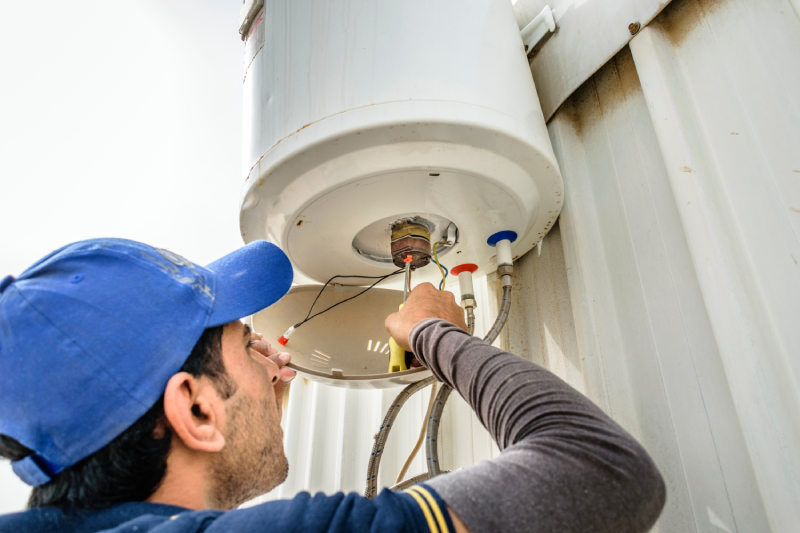
To flush a water heater, switch off the power or set the gas to pilot, close the cold-water inlet, attach a garden hose to the drain valve, and open it to drain the tank and clear sediment. In Salt Lake City’s very hard water, flush every 6 to 12 months. Most flushes take 30 to 60 minutes.
Sediment is the quiet killer of tank water heaters, and in Salt Lake City it builds up fast. Flushing is the single maintenance task that clears that buildup, protects efficiency, and helps your tank reach the high end of its expected life. This guide walks through how to flush a water heater safely, how often to do it here, and when to hand the job to a pro.
Why Sediment Builds Up Faster in Salt Lake City
Salt Lake City sits in one of the country’s hard-water belts. Local supply blends mineral-rich runoff from the Wasatch canyons with deep wells across the Salt Lake Valley, and the city notes that its well water runs harder, carrying more minerals, than its surface sources (Source: Salt Lake City Department of Public Utilities). Local hardness is commonly measured in the very hard range, around 13 grains per gallon. The U.S. Geological Survey classifies anything above roughly 10.5 grains per gallon (180 mg/L) as very hard (Source: U.S. Geological Survey).
When that hard water is heated, dissolved calcium and magnesium drop out of solution and settle as mineral deposits on the bottom of the tank. Hardness itself is not a health concern, which is why the U.S. Environmental Protection Agency treats it as a non-enforceable, aesthetic secondary standard rather than a regulated limit (Source: U.S. Environmental Protection Agency). For your water heater, though, that sediment buildup is exactly what steals efficiency and shortens tank life, which is why regular tank flushing matters more here than in soft-water regions.
What Does Flushing a Water Heater Actually Do?
Flushing a water heater drains the tank and uses incoming cold water to stir up and wash out the sediment that collects at the bottom. Regular water heater flushing is the core of water heater maintenance for hard-water homes. Left in place, that mineral layer insulates the burner or lower element, forces the unit to work harder, and can cause popping or rumbling sounds.
The U.S. Department of Energy lists flushing as routine storage-tank maintenance and recommends draining water from the tank on a regular schedule, along with checking the temperature and pressure relief valve every six months (Source: U.S. Department of Energy). A storage water heater averages about 15 years of service, and consistent flushing is one of the things that helps it get there (Source: U.S. Department of Energy).
How Often Should You Flush a Water Heater in Salt Lake City?
Flush a water heater every 6 to 12 months in Salt Lake City because of the very hard water, even though national guidance often suggests once a year. Softer regions can stretch the interval; mineral-heavy areas cannot. Use water hardness to set your schedule:
| Water Hardness | Classification | Suggested Flush Frequency |
|---|---|---|
| Below 7 grains per gallon | Soft to moderate | Once a year |
| 7 to 10 grains per gallon | Hard | Every 9 to 12 months |
| Above 10 grains per gallon (Salt Lake City range) | Very hard | Every 6 to 12 months |
Homes with a water softener can usually lean toward the longer end, since less mineral content reaches the tank. If you hear rumbling, see cloudy or gritty hot water, or your unit is overdue, flush sooner.
How to Flush a Water Heater: Step by Step
Here is how to drain a water heater and flush sediment from the tank safely. Set aside 30 to 60 minutes and have a garden hose ready. Done correctly, these steps flush sediment from water heater tanks before it can harden into scale.
- Cut the heat. For an electric unit, switch off the breaker. For a gas unit, set the control to pilot. This prevents the elements or burner from firing on an empty or low tank.
- Shut the cold-water inlet. Close the valve on the cold-water line entering the top of the tank.
- Connect a hose to the drain valve. Attach a garden hose to the drain valve at the base of the tank and run the other end to a floor drain, driveway, or large bucket. Hot water and debris will come out, so route it safely.
- Open a hot tap. Turn on a hot-water faucet somewhere in the house to break the vacuum and let the tank drain smoothly.
- Open the drain valve. Let the tank empty. Cloudy water and grit at this stage are the sediment buildup you are removing.
- Flush with the cold inlet. With the drain valve still open, briefly open the cold-water inlet in short bursts. The incoming water stirs and pushes out remaining mineral deposits until it runs clear.
- Close up and refill. Close the drain valve, remove the hose, close the hot tap, and reopen the cold-water inlet. Let the tank fill completely (you will hear it) before restoring power or moving the gas control off pilot.
- Confirm normal operation. Once full, restore the breaker or gas setting and check for leaks around the drain valve.
If water trickles or the drain valve clogs with hardened sediment, stop and call a pro rather than forcing it. A stuck or leaking plastic drain valve is a common hard-water failure point.
Pre-Flush Tools and Safety Checklist
- Garden hose that reaches a safe drain point
- Bucket and gloves (drained water is hot)
- Flathead screwdriver (some drain valves need one)
- Towel for drips at the valve
- Know your shutoff: breaker for electric, gas control for gas
- Cold-water inlet valve located and working
- Plan for where hot, sediment-heavy water will go
Myth: Draining a Water Heater Is the Same as Flushing It
Is draining the tank the same as a flush? No. Draining simply empties the tank. A true flush keeps the drain valve open while you cycle the cold-water inlet, so the inrushing water scours out settled mineral deposits instead of leaving them behind. Skipping the flush step is why some tanks still rumble right after a “drain.”
DIY or Call a Pro? A Quick Comparison
| Factor | DIY Flush | Professional Flush |
|---|---|---|
| Typical cost | Low (your time, a hose) | |
| Best when | Newer tank, working drain valve, comfortable with shutoffs | Heavy sediment, stuck or leaking drain valve, older tank, or no time |
| Added value | Basic sediment removal | Full inspection of anode rod, valve, and connections during the visit |
More Questions Homeowners Ask
Can I flush a water heater myself?
Yes, if you can safely cut the power or gas, locate the shutoffs, and operate the drain valve. If the valve is seized or the tank is more than 10 years old with no flush history, a professional flush is safer.
How long does it take to flush a water heater?
Most flushes take 30 to 60 minutes, longer if heavy sediment buildup slows the drain.
Will flushing fix a noisy water heater?
Often, yes. Popping and rumbling usually come from mineral deposits cracking under the heat, and flushing removes the cause. If noise continues, the tank may need further service.
Do tankless water heaters need flushing?
Yes, but differently. Tankless units are descaled with a circulation pump and cleaning solution rather than a gravity drain, and in hard water they should be descaled about once a year.
Is it bad to flush an old water heater?
On a tank that has never been flushed and is past 12 years, sediment can sometimes be the only thing sealing a corroded spot. If your tank is old and never serviced, have a plumber assess it before flushing.
What if no water comes out of the drain valve?
The valve is likely clogged with hardened sediment. Do not force it. This is a common hard-water issue and a good reason to bring in a Salt Lake City water heater technician.
Key Facts at a Glance
- Salt Lake City water is commonly very hard, around 13 grains per gallon (above the 10.5 grain very-hard threshold) (Source: U.S. Geological Survey).
- The U.S. Department of Energy lists tank flushing and a temperature and pressure valve check as routine storage-heater maintenance (Source: U.S. Department of Energy).
- Average storage tank water heater lifespan is about 15 years, and flushing helps reach it (Source: U.S. Department of Energy).
- In very hard water, flushing every 6 to 12 months is a sensible interval.
- A typical flush takes 30 to 60 minutes.
- Sediment buildup insulates the burner or element, raising energy use and causing rumbling.
Keep Your Salt Lake City Water Heater Running Longer
Knowing how to flush a water heater is one of the cheapest ways to protect a tank against Salt Lake City’s hard water. If your unit is rumbling, your hot water looks gritty, or it has been more than a year, a flush now can restore efficiency and add years of service.
Hale Home Services has served Salt Lake City homeowners for over a decade with licensed plumbers and 24/7 emergency availability. Call 385-853-7378 or contact us online to schedule professional water heater maintenance, from a full flush to a complete tune-up.
Keep reading:
