

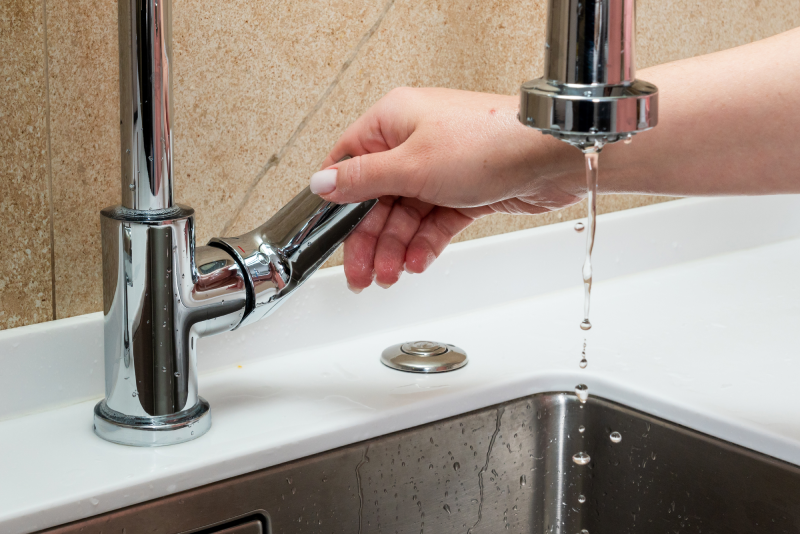
To fix a leaky faucet, turn off the water supply under the sink, plug the drain, and remove the handle. Then replace the worn part causing the drip, usually a faucet washer, O-ring, or cartridge. Reassemble and test. Most repairs take 30 to 60 minutes. In Salt Lake City’s hard water, worn internal parts are the usual cause.
A dripping faucet is easy to ignore, but it wastes water and money every day it goes unfixed. The good news is that most leaks come down to one small worn part, and the repair is well within reach for a confident homeowner. This guide covers how to fix a leaky faucet step by step, what part is usually to blame, and why faucets tend to wear out faster here in Salt Lake City.
Why a Dripping Faucet Is Worth Fixing in Salt Lake City
A single drip seems harmless, but a faucet that drips once per second can waste more than 3,000 gallons of water per year (Source: U.S. Environmental Protection Agency). Across the country, easy-to-fix household leaks waste close to a trillion gallons annually, and fixing them can trim about 10 percent off a water bill (Source: U.S. Environmental Protection Agency). In a dry state like Utah, that wasted water matters even more.
Salt Lake City also makes faucets work harder. The city blends mineral-rich runoff from the Wasatch canyons with deep wells across the Salt Lake Valley, and notes its well water runs harder than its surface sources (Source: Salt Lake City Department of Public Utilities). Local water is commonly very hard, around 13 grains per gallon, which the U.S. Geological Survey classifies as very hard (Source: U.S. Geological Survey). Those minerals wear down rubber washers and O-rings and corrode valve seats faster, which is why leaky faucets show up sooner in hard-water homes.
What Causes a Faucet to Leak or Drip?
Most faucet leaks come from one of four worn parts: a faucet washer, an O-ring, a corroded valve seat, or a failing cartridge. Knowing which one is leaking points you to the right fix.
- Faucet washer: Common in older two-handle compression faucets. A flattened or cracked washer lets water drip from the spout.
- O-ring: A small rubber ring that seals the stem. A worn O-ring usually causes a leaky faucet handle rather than a spout drip.
- Valve seat: Where the washer presses to shut off flow. Mineral buildup and corrosion here cause a steady drip even with a fresh washer.
- Cartridge: In single-lever and many modern faucets, a worn cartridge is the usual culprit and calls for cartridge replacement.
Tools You Will Need
- Adjustable wrench and slip-joint pliers
- Flathead and Phillips screwdrivers
- Replacement parts: faucet washer, O-ring, or matching cartridge
- Plumber’s grease and pipe tape
- Old towel and a drain plug
- Penetrating oil for mineral-stuck parts (common here)
- White vinegar to dissolve mineral deposits
How to Fix a Leaky Faucet Step by Step
These steps show how to stop a dripping faucet by replacing the worn part inside. Set aside 30 to 60 minutes.
- Turn off the water supply. Close the hot and cold shutoff valves under the sink. If there are none, shut off the main. Open the faucet to release pressure.
- Plug the drain and lay a towel. This catches small parts and protects the sink.
- Remove the handle. Pry off the decorative cap, remove the screw underneath, and lift the handle off. A leaky faucet handle often traces back to the part right under here.
- Expose the internal parts. Unthread the packing nut or remove the retaining clip to reach the stem or cartridge.
- Replace the worn part. For a compression faucet, swap the faucet washer and the O-ring on the stem. For a cartridge faucet, pull the old cartridge and complete the cartridge replacement with an exact match.
- Check the valve seat. Feel for roughness or pitting where the washer seals. Clean mineral buildup with vinegar, and if the valve seat is corroded, reseat or replace it so the new washer can seal.
- Reassemble. Add a little plumber’s grease to the O-ring, then put everything back in reverse order. Do not overtighten.
- Turn the water on slowly and test. Open the shutoffs gradually and run the faucet. No drip means the repair held.
If the faucet still drips after a new part, the cause may be deeper in the valve body or the faucet may be worn out. That is the point to bring in a licensed Salt Lake City plumber.
Faucet Types and What Usually Leaks
Identify your faucet type first, since it tells you which dripping faucet repair you are doing.
| Faucet Type | Usual Leak Cause | Typical Fix |
|---|---|---|
| Compression (separate hot and cold handles) | Worn rubber washer or corroded valve seat | Faucet washer replacement; reseat or replace the valve seat |
| Cartridge (single or double handle) | Worn cartridge or O-rings | Cartridge replacement; replace the O-ring |
| Ball (single handle, common in kitchens) | Worn springs, seats, or O-rings | Install a ball-faucet repair kit |
| Ceramic disc (single lever) | Worn seals or sediment on the disc | Clean or replace the seals or disc cartridge |
Fixing a Leaky Faucet Handle
If water seeps from under the handle instead of the spout, the O-ring is usually the cause. Shut off the water, remove the handle, slide off the old O-ring, and roll a new one of the same size into place with a little plumber’s grease. In hard water, swap the faucet washer at the same time so you are not back under the sink in a month.
The Salt Lake City Hard Water Factor
Hard water is the quiet reason faucets here leak sooner. Dissolved minerals leave deposits that stiffen and crack rubber washers and O-rings, scale up cartridges, and pit valve seats (Source: U.S. Geological Survey). The same buildup clogs the aerator on the spout tip, which slows flow and puts extra pressure on the worn parts inside.
Two habits help in Salt Lake City: soak the aerator in white vinegar once or twice a year to clear mineral deposits, and keep a couple of spare washers and O-rings on hand, since they wear faster here than the packaging suggests.
Myth: Tightening the Handle Will Stop the Drip
Will cranking the handle tighter stop a drip? No, and it usually makes things worse. Forcing a handle down grinds the worn washer harder into the valve seat, which damages both. A steady drip means an internal part has worn out, and the fix is to replace it, not to over-tighten the handle.
When to Call a Plumber
- The faucet still drips after replacing the washer, O-ring, or cartridge.
- The shutoff valves are seized or leaking.
- You see water under the sink or signs of a hidden supply-line leak.
- The faucet body is corroded or the parts are no longer available.
- You would rather not risk damaging an older or specialty faucet.
More Questions Homeowners Ask
Why does my faucet still drip after I replaced the washer?
The valve seat is likely corroded or pitted, so the new washer cannot seal. Reseating or replacing the valve seat usually solves it.
How do I know if it is the cartridge or the washer?
Single-lever faucets almost always use a cartridge. Two-handle faucets that drip from the spout usually need a washer; leaks from under the handle point to an O-ring.
How much does a leaky faucet really waste?
A faucet dripping once per second wastes more than 3,000 gallons a year (Source: U.S. Environmental Protection Agency).
Can I fix a leaky faucet without turning off the water?
No. Always shut off the supply valves under the sink, or the main, before opening a faucet.
Why do my faucets wear out so fast in Salt Lake City?
Hard water. Minerals degrade washers and O-rings and corrode valve seats faster than in soft-water areas.
Is a dripping faucet an emergency?
Usually not, but it wastes water daily and can signal a worn valve. If you also see water pooling under the sink, treat that as more urgent.
Key Facts at a Glance
- A faucet dripping once per second wastes more than 3,000 gallons of water per year (Source: U.S. Environmental Protection Agency).
- Easy-to-fix household leaks waste close to a trillion gallons nationwide each year, and fixing them can save about 10 percent on a water bill (Source: U.S. Environmental Protection Agency).
- Most faucet leaks come from a worn faucet washer, O-ring, valve seat, or cartridge.
- Salt Lake City water is commonly very hard, around 13 grains per gallon, which wears these parts faster (Source: U.S. Geological Survey).
- Most DIY faucet repairs take 30 to 60 minutes.
- A leaky faucet handle is usually an O-ring; a spout drip is usually a washer or cartridge.
Stop That Drip for Good in Salt Lake City
Knowing how to fix a leaky faucet saves water, money, and the late-night annoyance of a steady drip. Most repairs are a quick part swap, but hard-water corrosion and stubborn valves can turn a simple job into a frustrating one.
Hale Home Services has served Salt Lake City homeowners for over a decade with licensed plumbers and 24/7 emergency availability. Call 385-853-7378 or contact us online for fast faucet and plumbing repair, whether the drip will not quit or you would rather leave it to a pro.
Keep reading:
