

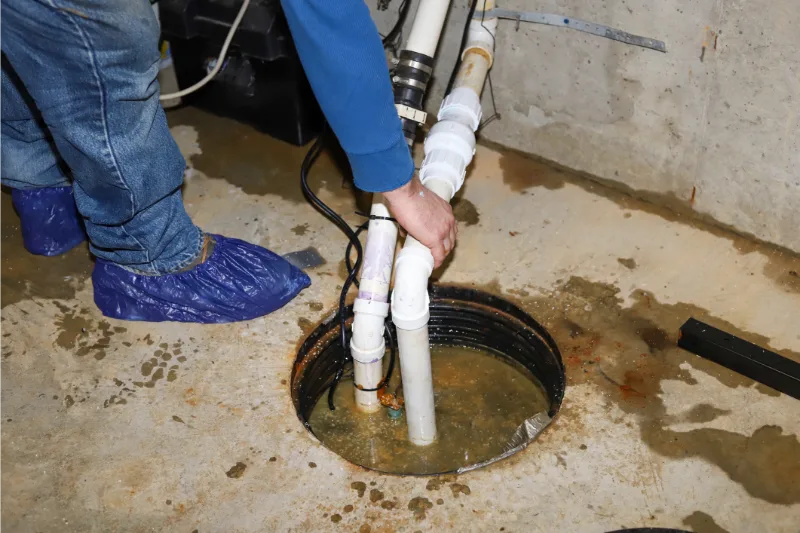
Heavy rain or rapid snowmelt can send water toward your home’s foundation long before you notice any signs inside. Understanding how does a sump pump work helps explain why this simple piece of equipment plays such an important role in protecting basements and crawl spaces from excess groundwater.
A properly functioning sump pump collects water before it reaches your living space and directs it safely away from your home. While it can’t prevent every type of flooding, it can significantly reduce the risk of water entering areas below ground level when groundwater begins to rise.
What Does a Sump Pump Do?
Many homeowners know they have a sump pump but aren’t entirely sure what does a sump pump do until it starts running during a storm.
Its primary purpose is to remove groundwater that collects beneath or around the home’s foundation. As water enters a specially designed basin, the pump automatically activates and moves the water outside through a discharge line.
This process helps reduce moisture around the foundation and lowers the chance of water entering the basement.
The Basic Parts of a Sump Pump System
Understanding a few sump pump basics makes it easier to recognize how the system operates.
The main components include:
- Sump pit
- Float switch
- Pump motor
- Check valve
- Discharge pipe
Each part works together to move unwanted water safely away from the home.
| Component | Purpose | Why It Matters |
| Sump pit | Collects groundwater | Provides a place for water to gather |
| Float switch | Detects rising water | Turns the pump on automatically |
| Pump motor | Moves water | Pumps water out of the pit |
| Check valve | Prevents backflow | Stops water from flowing back into the pit |
| Discharge pipe | Carries water outside | Directs water away from the home’s foundation |
How Sump Pumps Work
Understanding how sump pumps work is surprisingly straightforward.
As groundwater enters the sump pit, the water level gradually rises. Once it reaches a preset height, the float switch activates the pump motor.
The pump pushes water through the discharge pipe, carrying it away from the home. Before the water can flow backward into the pit, the check valve closes automatically, helping maintain efficient operation.
Once the water level drops, the float switch lowers, and the pump turns off until it’s needed again.
Why the Check Valve Matters
The check valve is a small component with an important job.
Without it, water inside the discharge line could drain back into the sump pit every time the pump shuts off. That unnecessary backflow forces the pump to cycle more often, increasing wear on the system.
If you hear repeated cycling shortly after the pump stops, the check valve may need inspection.
How the Float Switch Controls the Pump
The float switch acts as the system’s automatic control.
As water rises inside the basin, the float moves upward. Once it reaches the activation point, it signals the pump to begin removing water. After the water level falls, the float lowers again, turning the pump off.
If the float becomes stuck or obstructed, the pump may fail to start—or continue running longer than necessary.
Signs Your Sump Pump May Need Attention
Most sump pumps operate quietly in the background, so problems often go unnoticed until they’re needed most.
Watch for signs such as:
- The pump runs continuously.
- The pump doesn’t activate during heavy rain.
- Unusual grinding or rattling noises.
- Water remains inside the sump pit.
- Frequent cycling with very little water present.
Addressing these issues early can help avoid unexpected failures during periods of heavy rainfall.
Why Regular Maintenance Matters
Like any mechanical equipment, a sump pump benefits from periodic inspection.
Routine maintenance can help:
- Confirm the float switch moves freely.
- Verify the check valve is functioning properly.
- Ensure the discharge pipe remains clear.
- Remove debris from the sump pit.
- Identify worn components before they fail.
Regular maintenance helps improve reliability when the system is needed most.
When to Call a Professional Plumber
While homeowners can visually inspect a sump pump, diagnosing mechanical or electrical problems is often best left to a professional.
Professional service is recommended if:
- The pump won’t turn on.
- The system cycles constantly.
- Water isn’t leaving through the discharge pipe.
- The float switch appears stuck.
- The pump is making unusual noises.
- Water continues collecting around the foundation despite the pump operating.
The licensed plumbing professionals at Hale Home Services provide sump pump inspections and repairs throughout Utah, helping homeowners keep their systems ready before the next major storm.
Frequently Asked Questions
Does every home need a sump pump?
No. Homes with basements, crawl spaces, or properties where groundwater tends to collect are more likely to benefit from a sump pump than homes without those conditions.
How often should a sump pump run?
There’s no fixed schedule. During heavy rain or snowmelt, frequent operation may be completely normal. During dry weather, the pump may not run at all.
Can a sump pump prevent all flooding?
No. A sump pump helps manage groundwater entering the sump pit, but it isn’t designed to protect against every type of flood, such as severe overland flooding or plumbing leaks inside the home.
How long does a sump pump usually last?
Service life varies depending on usage, maintenance, and operating conditions. Regular inspections help identify wear before performance declines.
What happens if the power goes out during a storm?
Most standard sump pumps rely on household electricity. Some homeowners choose to install a battery backup system for additional protection during power outages.
Can debris damage a sump pump?
Yes. Dirt, gravel, and other debris inside the sump pit can interfere with the pump or the float switch, reducing efficiency or causing the system to malfunction.
Why is my sump pump turning on every few minutes?
Frequent cycling may indicate groundwater entering the pit rapidly, a problem with the check valve, or a float switch that needs adjustment or inspection.
Should water remain inside the sump pit?
Yes. A small amount of water typically remains at the bottom of the sump pit after the pump shuts off. This is generally a normal part of the system’s operation.
Can I test my sump pump myself?
Yes. Carefully pouring water into the sump pit can help verify that the float switch activates the pump and that water exits through the discharge pipe. If the system doesn’t respond properly, professional service is recommended.
Who should I call for sump pump service in Utah?
If your sump pump isn’t operating properly or you’d like it inspected before the next storm, Hale Home Services provides professional sump pump services throughout Utah to help protect your home from excess groundwater.
