

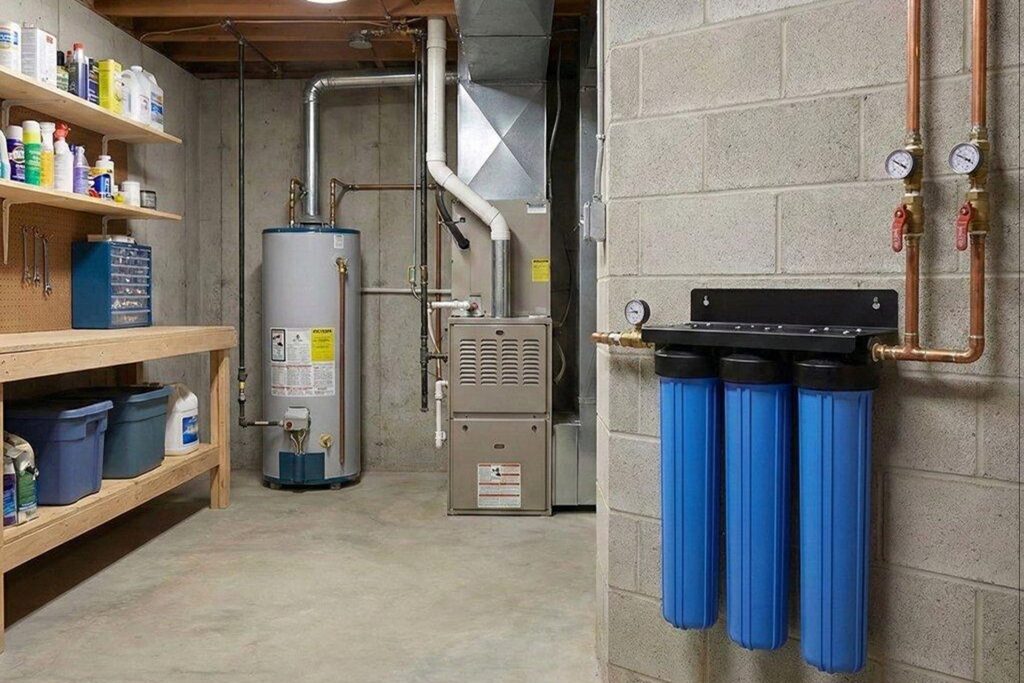
Clean water is essential for your home’s comfort and everyday needs. If you’re concerned about chlorine taste or odor, sediment, or other water quality issues, a whole-house water filtration system may be worth considering. Before choosing a system, it’s important to understand the equipment, installation, and ongoing maintenance costs.
The whole-house water filtration system installation cost depends on several factors, including the type of filtration system, your home’s plumbing layout, water quality, and household water usage.
For homeowners in Salt Lake City, Utah, understanding these costs can help you choose a system that fits your needs and budget. In this guide, Hale Home Services explains typical installation expenses, factors that affect pricing, and what to consider before investing in a whole-house water filter.
How Much Does a Whole-House Water Filtration System Cost in 2026?
In 2026, installing a whole-house water filtration system can cost approximately $850 to $5,400 for many residential applications. Specialized systems, including whole-house reverse osmosis configurations, may cost more depending on equipment and installation requirements. These figures are general budgeting estimates rather than a quote for your home.
The cost to install a water filtration system in 2026 varies depending on the system you select and the work required to connect it to your home’s main water supply.
| System type | Estimated installed cost |
| Basic sediment or carbon filtration | 850–1,500 |
| Multi-stage filtration system | 1,500–3,000 |
| Filtration with additional treatment, such as UV | 1,850–3,500+ |
| Filtration combined with water softening | 2,650–5,400+ |
| Whole-house reverse osmosis system | 4,800–8,000+ |
Note: These are broad planning estimates. Actual prices depend on equipment, labor rates, water conditions, and installation complexity.
A basic system may be sufficient if you primarily want to address sediment or chlorine-related taste and odor. Homes with specific contaminant concerns may require additional treatment stages or specialized equipment.
What Does the Whole-House Water Filtration System Installation Cost Include?
Professional installation involves more than purchasing a filter. The total cost generally includes equipment, plumbing connections, labor, and any additional components needed for the system to operate properly.
1. Filtration Equipment and System Type
The filtration unit is usually one of the largest components of your budget. Prices vary depending on the system’s capacity, filtration media, number of stages, and intended use.
Common options include:
- Sediment filters: Capture suspended particles such as sand, rust, and other sediment.
- Activated carbon filters: Can reduce chlorine, certain organic compounds, and unwanted tastes or odors when designed and certified for those contaminants.
- Multi-stage filtration systems: Combine different technologies to address multiple water quality concerns.
- UV treatment systems: Use ultraviolet light to inactivate susceptible microorganisms when properly designed and maintained.
- Reverse osmosis systems: Reduce certain dissolved substances and may require additional plumbing, storage, and drainage.
Choosing equipment based on your actual water quality concerns can help you avoid paying for features you don’t need.
2. Professional Installation Labor
Installation labor depends on the accessibility of your main water line, the location of the equipment, and the amount of plumbing work required.
A straightforward installation may require less labor than a project involving relocated pipes, additional shutoff valves, electrical connections, or a dedicated drain.
A plumber may need to:
- Inspect the existing plumbing and proposed installation location.
- Shut off and prepare the water supply.
- Install the necessary fittings, valves, and bypass connections.
- Mount and connect the filtration equipment.
- Check for leaks and verify that the system operates correctly.
Request an itemized estimate that separates equipment and labor so you can understand what the quoted price covers.
3. Plumbing Materials and Additional Components
Depending on the system, installation may require new pipe sections, fittings, shutoff valves, mounting hardware, or a bypass assembly.
Some systems also require electrical power, drainage, or additional space for tanks and related components.
These requirements can increase the whole-house water filtration system installation cost, particularly in older homes or properties where the main water line is difficult to access.
4. Water Testing and System Assessment
Water testing can help identify which treatment methods are appropriate for your home. The testing required depends on whether your property receives municipal water or uses a private well.
Municipal water customers can start by reviewing their utility’s annual water quality report. Additional testing may be appropriate if there are specific concerns about the home’s plumbing or water quality.
Private well owners may need laboratory testing for relevant contaminants before selecting a treatment system.
Test results help determine whether sediment filtration, carbon filtration, UV treatment, reverse osmosis, or another approach is suitable.
What Affects the Cost of Installing a Whole-House Water Filter in Salt Lake City, UT?
The cost of installing a whole-house water filter in Salt Lake City, UT, depends on your home’s plumbing, water conditions, and chosen equipment. Two homes in the same neighborhood can receive different estimates because their treatment requirements and installation conditions may differ.
1. Water Quality and Contaminant Concerns
Your water quality helps determine which filtration technology you need.
For example, a household primarily concerned about chlorine taste may need a different solution from a household dealing with sediment, iron, or a specific dissolved contaminant.
Hard water is another important consideration. Water filtration and water softening perform different functions, so a filter alone may not resolve mineral buildup caused by calcium and magnesium.
A water quality assessment can help determine whether one system or a combination of treatment methods is appropriate.
2. Home Size and Water Usage
The system must accommodate your household’s peak water demand. A larger household with multiple bathrooms and simultaneous water use may need equipment with a higher flow rate capacity.
An undersized system can restrict water flow, while an oversized system may increase the upfront expense without providing a meaningful benefit.
A professional assessment can help match the system’s capacity to your home’s actual needs.
3. Plumbing Layout and Accessibility
The location of the main water supply line can affect installation time and cost.
If the system can be installed in an accessible utility area, the work may be relatively straightforward. If pipes must be rerouted or the installation area needs modifications, labor and material expenses may increase.
The availability of a suitable electrical outlet or drain can also matter for systems that require those connections.
4. Filtration Technology and Certifications
Different technologies target different contaminants, and no single filter removes every possible impurity.
When comparing equipment, check the manufacturer’s performance data and relevant independent certifications. The applicable certification depends on the contaminant or performance claim being made.
Selecting a system based on verified performance is more useful than choosing one solely because it advertises multiple filtration stages.
5. Local Labor and Project Requirements
The final price also depends on the scope of work, contractor labor rates, required materials, and applicable local installation requirements.
For an accurate estimate, request a quote based on your home’s plumbing configuration rather than relying exclusively on a national average.
Whole-House Water Filtration Installation Cost Breakdown
Understanding the individual cost components can make contractor estimates easier to compare.
| Cost component | What it covers |
| Filtration equipment | Filter housing, media tank, cartridges, or treatment unit |
| Plumbing materials | Pipes, fittings, shutoff valves, and connectors |
| Installation labor | Plumbing connections, equipment setup, and testing |
| Additional treatment | Optional UV, specialized filtration, or other treatment stages |
| Water testing | Assessment of relevant water quality concerns |
| Ongoing maintenance | Replacement filters, media, and scheduled servicing |
Not every project will include every item. For example, a standard carbon filtration installation may not require electrical work, while a UV system typically needs an appropriate power supply.
Before approving a project, ask whether the estimate includes all necessary materials, installation, testing, and cleanup. Clarify whether optional upgrades are priced separately.
How Much Does Water Filtration Maintenance Cost?
The upfront installation price is only part of the long-term investment. Whole-house systems require maintenance to continue performing as intended.
Ongoing costs depend on the filtration technology, water quality, water consumption, and the manufacturer’s replacement schedule.
Typical maintenance requirements may include:
- Replacing filter cartridges: Sediment and carbon cartridges need replacement according to their rated capacity and service interval.
- Servicing filtration media: Certain tank-based systems require periodic media replacement or other scheduled service.
- Cleaning system components: Some equipment needs periodic cleaning or inspection.
- Checking for leaks: Connections, valves, and housings should be inspected as recommended by the manufacturer.
- Monitoring performance: Changes in water pressure, taste, odor, or other characteristics may indicate that maintenance or further investigation is needed.
When comparing systems, ask about replacement filter prices, expected service intervals, and any specialist maintenance requirements.
A system with a lower purchase price may not have the lowest long-term cost if its replacement components are expensive or need frequent changing.
Is Installing a Whole-House Water Filtration System Worth It?
A whole-house filtration system may be worthwhile if you have specific water quality concerns that the selected technology can address.
Potential benefits include:
- Treating water at multiple fixtures rather than only one faucet.
- Reducing targeted contaminants when the system is appropriately certified.
- Improving taste or odor when the filtration media is designed for those issues.
- Supporting a consistent water treatment approach throughout the home.
- Allowing you to choose treatment based on your household’s water usage and requirements.
However, filtration is not a universal solution. It does not automatically eliminate every contaminant, correct hard water, or guarantee that water is safe to drink.
Before making a purchase, identify the problem you want to solve, review the system’s documented capabilities, and account for ongoing maintenance expenses.
How to Get an Accurate Water Filtration Installation Estimate
If you’re planning a water filtration project in Salt Lake City, a few steps can help you obtain a more accurate quote.
- Identify your water source. Determine whether your home receives municipal water or uses a private well.
- Review your water quality. Consult your municipal water report or arrange appropriate testing when necessary.
- Define your priorities. Decide whether you’re addressing taste, odor, sediment, hardness, or specific contaminants.
- Assess installation requirements. Consider the location of your main water line, available space, and any required plumbing modifications.
- Compare itemized estimates. Review equipment specifications, labor, materials, warranties, and maintenance costs.
- Confirm system performance. Verify that the equipment is designed for your concerns and household water demand.
These steps can help you compare estimates on an equivalent basis rather than choosing a system based only on its initial price.
Get Help With Your Water Filtration Project From Hale Home Services
Choosing a water treatment system involves more than comparing equipment prices. The right solution depends on your water quality, plumbing layout, household usage, and long-term maintenance needs.
Hale Home Services serves homeowners in Salt Lake City and the surrounding Utah area with plumbing services. If you’re considering a water filtration project, contact Hale Home Services to discuss your plumbing needs and determine which installation options may be appropriate for your home.
FAQs About Whole-House Water Filtration System Installation Cost
1. What is the average whole-house water filtration system installation cost in 2026?
The average cost varies according to system type, equipment capacity, and installation complexity. A general planning range for many whole-house systems is approximately $850 to $5,400 installed, while specialized systems can cost more. A property-specific estimate is needed to determine your actual price.
2. How much does it cost to install a whole-house water filter in Salt Lake City, UT?
The cost of installing a whole-house water filter in Salt Lake City, UT, depends on the selected filtration technology, local labor rates, plumbing accessibility, and any additional treatment stages. A basic installation may cost considerably less than a complex multi-stage or reverse osmosis system. Request an itemized estimate for an accurate local price.
3. What is included in the cost to install a water filtration system in 2026?
The total typically includes the filtration unit, necessary plumbing materials, and installation labor. Depending on the system, the estimate may also include water testing, electrical connections, drainage, additional treatment equipment, and startup testing.
4. Does a whole-house water filtration system remove hard water?
Not necessarily. Standard sediment and carbon filters do not remove the calcium and magnesium minerals responsible for water hardness. A water softener or another suitable hardness treatment system may be needed.
5. How often should whole-house water filters be replaced?
Replacement intervals depend on the filter type, manufacturer’s recommendations, incoming water quality, and household consumption. Some cartridges require replacement more frequently than tank-based media. Follow the manufacturer’s schedule and monitor system performance.
6. Can I install a whole-house water filtration system myself?
Some homeowners may be able to install simpler systems if they have the necessary plumbing skills and follow the manufacturer’s instructions and applicable local requirements. Professional installation can be helpful when the project involves modifying the main water line, adding electrical connections, or configuring specialized treatment equipment.
7. Is a whole-house water filter better than an under-sink filter?
Neither option is universally better. A whole-house system treats water supplied to multiple fixtures, while an under-sink filter focuses on a specific faucet or point of use. Your choice should depend on which water quality concerns you want to address and where treatment is needed.
8. How can I reduce the long-term cost of a whole-house water filtration system?
Choose equipment that matches your actual water quality needs, compare replacement filter prices, follow the recommended maintenance schedule, and avoid unnecessary treatment stages. Considering both installation and recurring costs can help you estimate the system’s total cost of ownership.
