

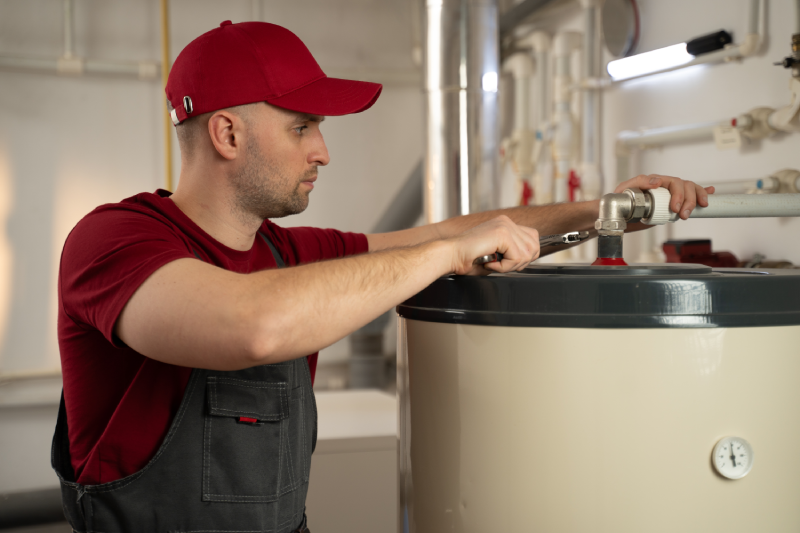
Most traditional tank water heaters last 10 to 15 years, and tankless units last 20 years or more (Source: U.S. Department of Energy). In Salt Lake City, very hard water often shortens tank life to roughly 8 to 12 years. You should replace yours once it leaks from the tank, produces rusty water, runs cold, or passes the 12-year mark, whichever comes first.
Why Lifespan Looks Different in Salt Lake City
National lifespan averages assume average water. Salt Lake City water is not average. The Salt Lake City Department of Public Utilities reports local hardness ranging from 121 to 487 parts per million, with most areas between 157 and 189 parts per million, which rates as hard to very hard (Source: Salt Lake City Department of Public Utilities). Across the Salt Lake Valley, hardness commonly sits near 13 grains per gallon.
That mineral load matters. Every time hard water is heated, calcium and magnesium drop out and settle as sediment at the bottom of the tank. Sediment buildup forces the burner or element to work harder, traps heat against the steel, and speeds up tank corrosion. For many Salt Lake City homeowners, that is the difference between a heater that reaches 14 years and one that fails at 9.
What Is the Average Water Heater Lifespan?
A standard storage tank water heater lasts 10 to 15 years, and a tankless water heater lasts about 20 years or more (Source: U.S. Department of Energy). Local water quality, maintenance, and install quality move you up or down within that range.
Here is how the common types compare:
- Tank (gas or electric): 10 to 15 years typical, often 8 to 12 in hard-water areas like Salt Lake City.
- Tankless / on-demand: 20 years or more, with replaceable parts that can extend life further.
- Heat pump (hybrid) water heaters: 10 to 15 years.
- Solar water heaters: around 20 years.
If your unit is past 10 years old, it is already inside the replacement window, even if it still works today.
How Does Salt Lake City’s Hard Water Affect Water Heater Life Expectancy?
Yes. Hard water leaves mineral sediment inside the tank, which accelerates corrosion, lowers efficiency, and can cut years off the unit. With Salt Lake City rated very hard, untreated homes often see faster wear than the national average.
Three things happen inside a tank fed by very hard water:
- Sediment buildup: Minerals settle into a hard crust on the tank floor, creating the popping and rumbling sounds many homeowners notice after a few years.
- Anode rod sacrifice: The anode rod corrodes first to protect the steel tank. In hard water it depletes faster, and once it is gone, the tank itself starts to rust.
- Tank corrosion and leaks: Once rust reaches the steel, a leak is usually permanent and means full replacement.
A whole-home water softener and annual flushing are the two most effective ways Salt Lake City homeowners slow this process down.
Tank vs Tankless: Which Water Heater Lasts Longer?
Tankless wins. Tankless water heaters last 20 years or more, roughly double the 10 to 15 year life of a storage tank, because they do not hold standing water that rusts the tank (Source: U.S. Department of Energy).
| Factor | Tank Water Heater | Tankless Water Heater |
|---|---|---|
| Typical lifespan | 10 to 15 years (8 to 12 in hard water) | 20 years or more |
| How it fails | Tank corrodes and leaks | Parts wear, often replaceable |
| Energy efficiency | Standby loss from reheating | 24% to 34% more efficient at lower use (DOE) |
| Hard-water sensitivity | High (sediment in tank) | High (scale on heat exchanger) |
| Upfront cost | Lower | Higher |
| Best for | Budget replacement now | Long-term Salt Lake City homeowners |
Both types need protection from hard water. The failure point is just different: a tank rusts out, while a tankless unit scales up.
When Should You Replace Your Water Heater?
Replace it when it reaches 10 to 12 years old, leaks from the tank, produces rusty or smelly hot water, runs out of hot water faster than it used to, or needs a repair that costs close to a new unit. Tank leaks almost always mean replacement, not repair.
In Salt Lake City, the typical water heater replacement age is around 10 to 12 years, and sooner in homes on very hard water. Watch for these replacement signals:
- Water pooling around the base of the tank.
- Rusty, brown, or metallic-smelling hot water.
- Rumbling, popping, or banging from sediment.
- Hot water that cools quickly or never gets fully hot.
- Rising energy bills with no other explanation.
- Age past 10 years, especially with no maintenance history.
7 Factors That Decide How Long Your Water Heater Lasts
- Water hardness. Very hard Salt Lake City water speeds up sediment and shortens tank life.
- Sediment buildup. Unflushed tanks overheat and corrode from the bottom up.
- Anode rod condition. A depleted anode rod leaves the tank exposed to rust.
- Maintenance habits. Annual flushing and inspection can add years of life.
- Installation quality. A licensed, code-correct install prevents early failure.
- Usage demand. Larger households cycle the unit harder and wear it faster.
- Manufacturer warranty tier. Higher-warranty tanks (10 to 12 year) often use thicker anodes and last longer than entry-level (6 year) models.
Maintenance Checklist to Extend Your Water Heater’s Life
- Flush the tank once a year to clear sediment buildup.
- Check the anode rod every 2 to 3 years and replace when worn.
- Set the thermostat to 120 degrees Fahrenheit for efficiency and safety.
- Test the temperature and pressure relief valve annually.
- Insulate the tank and hot water lines (DOE notes insulation can cut standby heat loss by 25% to 45%) (Source: U.S. Department of Energy).
- Consider a whole-home water softener to fight Salt Lake City hard water.
- Schedule a professional inspection if the unit is past 8 years old.
Myth Check: “It Still Heats Water, So It Is Fine”
Is a water heater fine as long as it still makes hot water? No. A unit can still produce hot water while the tank is quietly rusting toward a leak. Hot water output is not proof of a healthy tank. Age, rust-colored water, and sediment noise are better warning signs, and a tank leak is rarely repairable once it starts.
Repair or Replace? A Quick Decision Guide
| Situation | Usually Repair | Usually Replace |
|---|---|---|
| Unit age | Under 8 years | 10 years or older |
| Problem | Thermostat, element, valve | Tank leak, internal rust |
| Water quality | Clear | Rusty or smelly |
| Repair cost | Under 50% of new unit | Near or over 50% of new unit |
| Frequency | First repair | Repeated repairs |
When repairs start stacking up on a tank past 10 years, replacement is almost always the smarter spend.
More Questions Salt Lake City Homeowners Ask
How long does a hot water heater last on average?
A hot water heater lasts 10 to 15 years for a storage tank and 20 years or more for tankless (Source: U.S. Department of Energy). Hard water can shorten the tank range.
At what age should I replace a water heater?
Most homeowners should plan replacement around 10 to 12 years, and sooner if the tank leaks or the water turns rusty.
Can a water heater last 20 years?
A tank water heater rarely reaches 20 years, though it is possible with soft water and yearly maintenance. Tankless units commonly reach 20 years or more.
Does flushing really extend water heater life?
Yes. Removing sediment reduces overheating and corrosion, which is especially important in Salt Lake City’s very hard water.
Is a leaking water heater an emergency?
A tank leak can cause water damage quickly. Hale Home Services offers 24/7 emergency and same-day water heater service in Salt Lake City. Call 385-853-7378.
Key Facts at a Glance
- Tank water heater lifespan: 10 to 15 years (Source: U.S. Department of Energy).
- Tankless water heater lifespan: 20 years or more (Source: U.S. Department of Energy).
- Salt Lake City water hardness: 121 to 487 ppm, most areas 157 to 189 ppm (Source: Salt Lake City Department of Public Utilities).
- Salt Lake Valley average: about 13 grains per gallon (very hard).
- Replacement window opens: around age 10.
- Tankless efficiency gain: 24% to 34% at lower household use (Source: U.S. Department of Energy).
- Insulation standby-loss reduction: 25% to 45% (Source: U.S. Department of Energy).
Talk to a Salt Lake City Water Heater Expert
If your water heater is past 10 years old, leaking, or running cold, do not wait for a cold-shower emergency. Hale Home Services has served Salt Lake City homeowners for over a decade with licensed, locally owned and operated plumbing, 24/7 emergency response, same-day water heater service, and a 100% satisfaction guarantee.
Call 385-853-7378 or schedule online for a water heater inspection, repair, or replacement quote.
Keep reading:
