

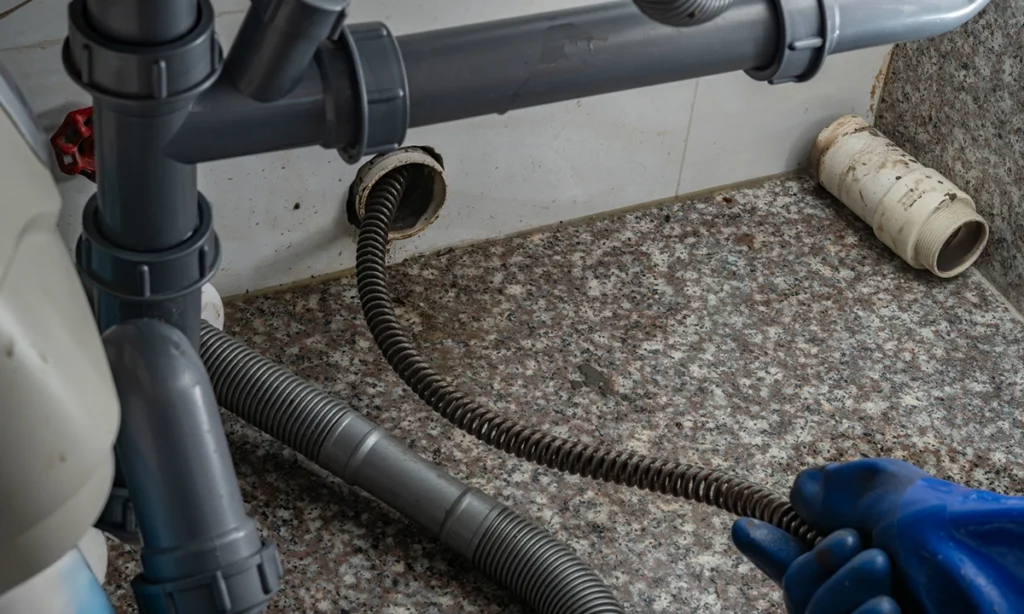
A 3-inch sewer and drain pipe is common in residential plumbing, especially around toilets, branch drains, and waste stacks. But “3-inch” is not automatically the right size for every part of a home’s drainage system. The correct diameter depends on fixture load, slope, layout, and local plumbing requirements.
For homeowners, the main question is usually whether a 3-inch sewer and drain pipe is large enough for a toilet or a larger section of the drainage system. In many interior applications, it is.
Where Is a 3-Inch Sewer and Drain Pipe Used?
A 3-inch sewer and drain pipe is commonly used for toilet drains, bathroom branches, vertical soil or waste stacks, and some building-drain sections. Smaller sink, shower, or laundry drains may feed into the larger 3-inch line.
3-Inch Toilet Drain Pipe
A 3-inch toilet drain pipe is one of the most common uses of this diameter because toilets discharge water, paper, and solids at once.
Under the 2021 International Plumbing Code, the minimum building drain serving a water closet is 3 inches. Utah currently adopts the 2021 IPC with state amendments, so homeowners should still confirm local requirements before changing a drain or sewer line.
Is a 3-Inch Toilet Drain Pipe Enough?
In many homes, yes. A properly designed 3-inch toilet drain pipe can serve a toilet and, depending on the drainage layout, additional fixtures.
Plumbing codes do not size drains by bathroom count alone. They use drainage fixture units to represent the probable load created by connected fixtures. Slope and pipe configuration also affect how much a line can carry.
That is why “How many toilets can be on a 3-inch drain?” does not have one answer for every house.
3-Inch Toilet Drain Pipe vs. 4-Inch Pipe
A 3-inch toilet drain pipe is often sufficient. A 4-inch line provides more capacity and may be appropriate for larger building drains, higher fixture loads, future additions, or where local rules require it.
Bigger is not automatically better; the goal is to size the system correctly for the expected load.
3-Inch vs. 4-Inch Sewer and Drain Pipe
The difference becomes more important as wastewater from more fixtures combines.
A 3-inch sewer and drain pipe is widely used inside residential drain, waste, and vent systems. A 4-inch line has substantially more capacity and is common on larger drains and sewer connections.
If you are adding bathrooms or replacing a main line, do not assume the existing diameter should simply be copied. The plumber should calculate the connected load and check current requirements.
It also helps to distinguish a building drain from a building sewer. The building drain is the lowest drainage piping inside the building; the building sewer continues from that system toward the public sewer or other disposal point. Those sections do not always use the same size.
How Much Can a 3-Inch Sewer and Drain Pipe Handle?
Capacity depends on drainage fixture units and slope rather than a simple number of toilets.
Under the 2021 IPC sizing table, a 3-inch building drain can carry different fixture-unit loads depending on its permitted slope. For a homeowner, the important point is that a 3-inch sewer and drain pipe should be sized as part of the entire system rather than judged from one fixture.
What Slope Does a 3-Inch Sewer and Drain Pipe Need?
Gravity drainage needs a consistent fall.
The 2021 IPC lists a minimum slope of 1/8 inch per foot for horizontal drainage piping from 3 through 6 inches, subject to applicable exceptions. Over a 10-foot run, that equals 1¼ inches of fall.
A 3-inch sewer and drain pipe also needs uniform support. A sagging section or “belly” can hold wastewater and solids even when the diameter itself is correct.
What Materials Are Used for 3-Inch Drain Lines?
PVC, ABS, and cast iron are all found in residential drainage.
PVC is common in modern work because it is lightweight and corrosion-resistant. ABS is used in some systems, while older homes may still have cast-iron piping.
Material and diameter are separate decisions. A 3-inch PVC line and a 3-inch cast-iron line still need to be correctly sized and installed for the application. Older cast iron may also develop corrosion or rough internal surfaces that contribute to recurring drainage problems.
What Size Is the Sewer Line From the House to the Street?
This is where interior drain sizing and exterior sewer sizing are often confused.
A 3-inch sewer and drain pipe may be appropriate inside the home, while the sewer lateral leaving the building may use another size. Older properties may also reflect construction practices that differ from current requirements.
Before replacing the house-to-street line, confirm the required diameter, connection point, depth, and slope. Sewer depth is site-specific and depends on grade, connection elevation, required fall, and local rules.
When Is a 3-Inch Sewer and Drain Pipe Not the Problem?
Recurring clogs do not necessarily mean the line is undersized.
A correctly sized 3-inch sewer and drain pipe can still have problems from tree roots, grease buildup, separated joints, corrosion, or a sagging section. Multiple slow drains, toilet gurgling, sewage odors, or repeated backups are better reasons to inspect the pipe than to assume a larger diameter is needed.
A sewer camera inspection can help distinguish a sizing problem from physical damage or blockage.
When to Call a Plumber About Pipe Size
If you are adding a bathroom, moving a toilet, replacing a main drain, or dealing with recurring backups, have the entire drainage layout checked rather than focusing on diameter alone.
Hale Home Services provides plumbing services, drain cleaning, and sewer line repair for homeowners who need help determining whether the problem is pipe sizing, blockage, or damage.
FAQs About 3-Inch Sewer and Drain Pipe
Can you use a 3-inch pipe for a sewer line?
A 3-inch pipe can be used in parts of a residential drainage system when its fixture load, slope, and application meet current requirements. Exterior sewer requirements should be checked separately.
Is a 3-inch sewer pipe big enough?
It can be. The answer depends on fixture load, slope, and where the pipe sits in the drainage system.
Can a toilet use a 3-inch drain pipe?
Yes. A 3-inch toilet drain pipe is common, and the 2021 IPC sets 3 inches as the minimum building-drain size serving a water closet.
Should a toilet drain be 3 inches or 4 inches?
A 3-inch toilet drain pipe works in many homes. A 4-inch line may be selected when the system needs more capacity or local requirements call for it.
How many toilets can be on a 3-inch drain?
There is no universal number. Drainage fixture units, slope, and pipe configuration determine allowable load.
What is the minimum slope for a 3-inch drain pipe?
The 2021 IPC lists a minimum slope of 1/8 inch per foot for horizontal drainage piping 3 through 6 inches, subject to applicable exceptions and local amendments.
Choose Pipe Size Based on the Whole System
A 3-inch sewer and drain pipe can be exactly right for a toilet, branch, stack, or other residential drainage section. What matters is matching it to fixture load, slope, layout, and local code.
If recurring sewer or drain problems make you question the existing pipe size, a professional inspection can show whether the line is undersized or whether blockage, damage, or poor slope is the real issue.
